Table of Contents
Key takeaway: Rising Duke Energy rates account for part of the increase — bills are up 22% since 2020 — but the bigger culprit in most Wake County homes is the building itself: leaky ducts, under-insulated attics, unsealed crawl spaces, and a building envelope that fights your HVAC system all summer long. These are fixable problems once you know where they are.
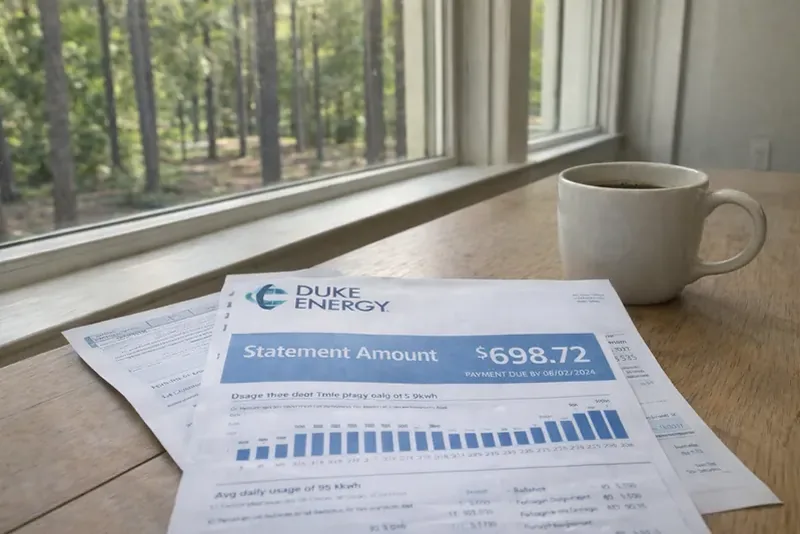
If you’ve opened a Duke Energy bill recently and felt your stomach drop, you’re not imagining it. Something has genuinely changed. But the usual advice — switch to LED bulbs, set your thermostat a few degrees warmer — doesn’t explain a $300 summer bill in a house that hasn’t changed. The real answer, for most NC homeowners, lives in the walls, attic, and crawl space.
What’s Actually Behind Rising Energy Bills in NC?
North Carolina electric bills have increased approximately 22% since 2020. Duke Energy Progress — which serves Wake County and most of the Triangle — has filed with the NC Utilities Commission for an additional 15–18% residential rate increase over 2027–2028. For a household using 1,000 kWh per month, that works out to roughly $28 more per month in the first year. The Commission is expected to rule this fall.
That’s the rate side of the equation — and it’s largely outside your control. The legislature sets the rules, the NCUC approves or rejects Duke’s requests, and residential customers pay the result.
But here’s what the utility companies don’t put in their press releases: rates explain only part of most homeowners’ bill increases. The other part is energy waste baked into the house itself. When your HVAC system runs longer than it needs to — because conditioned air is leaking out of your ductwork, because your attic is letting in July heat, because your crawl space is pumping humid air into your living spaces — you’re paying for energy that never reached a single room.
You can’t control what Duke Energy charges per kilowatt-hour. You can control how many kilowatt-hours your house wastes.
The Biggest Causes of High Energy Bills in NC Homes
HVAC is typically 40–50% of total home energy use in North Carolina. That means how well your house holds conditioned air — what building scientists call the building envelope — determines more of your bill than almost any other factor.
Poor Attic Insulation
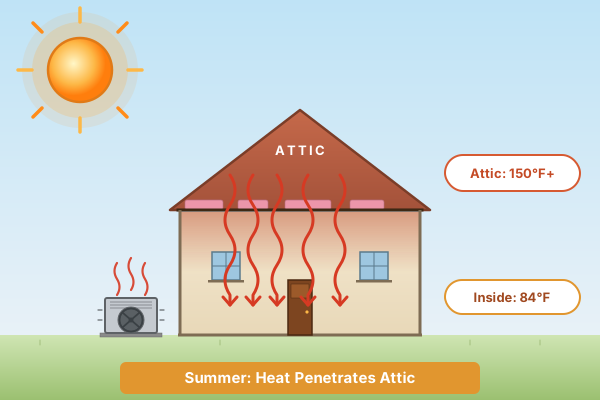
The attic is where most homes lose the battle against summer heat. In July, attic temperatures in Wake County regularly reach 130–150°F. If your attic insulation is inadequate — or if there are air leaks around light fixtures, HVAC equipment, and ceiling penetrations — that heat drives directly into your living spaces. Your air conditioner never catches up.
The Department of Energy recommends R-38 to R-60 insulation for attics in climate zone 4A, where most of the Triangle sits. Many older homes in Cary, Raleigh, and Fuquay-Varina were built with R-11 or R-19 — half or less of current standards. Adding insulation to current levels, combined with air sealing around penetrations, typically reduces heating and cooling costs by approximately 15–20%.
One thing worth understanding: insulation slows heat transfer, but it doesn’t stop air movement. If your attic has bypasses — unsealed gaps where wiring, plumbing, and HVAC equipment pass through the ceiling — air moves freely through them even with thick insulation sitting on top. Fixing those bypasses is often the higher-value half of an attic insulation project.
Air Leaks and the Stack Effect
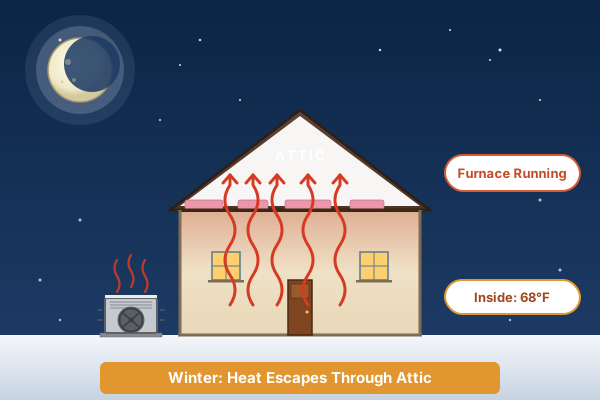
Your house breathes. Warm air is lighter than cool air, so it rises and exits through the upper levels of your home — attic hatches, recessed lights, penetrations around the HVAC system. As that air escapes, it creates negative pressure at the bottom of the house, which pulls replacement air in from below: through the crawl space, through foundation cracks, through any gap at the floor level.
Building scientists call this the stack effect. In a leaky house — and most homes built before 2000 in Wake County leak significantly — it operates around the clock, summer and winter. In summer, that incoming air carries Piedmont humidity into your home, raising indoor relative humidity and forcing your air conditioner to work harder. In winter, every cubic foot of warm air that escapes through the top must be replaced by cold outdoor air at the bottom.
North Carolina’s building code targets ≤5 ACH50 (air changes per hour at 50 pascals) for new construction. Most existing homes in the Triangle measure 8–15+ ACH50 without targeted air sealing — well above code and two or more times the leakage of a well-built new home.
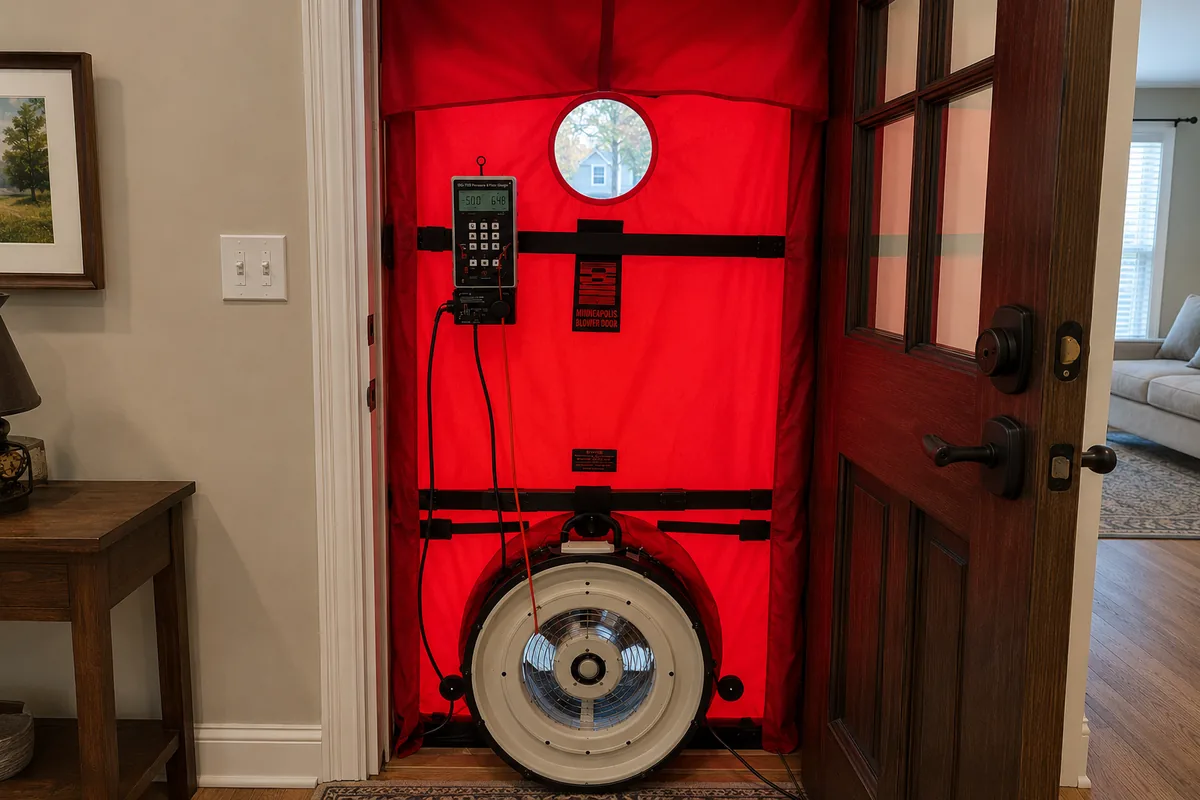
The only way to accurately measure your home’s air leakage is with a blower door test. It takes about 20 minutes, gives you a precise ACH50 reading, and when combined with thermal imaging, shows exactly where the leaks are.
Crawl Space Problems
This is the most underestimated energy problem in NC homes — and the one most articles about high energy bills never mention.
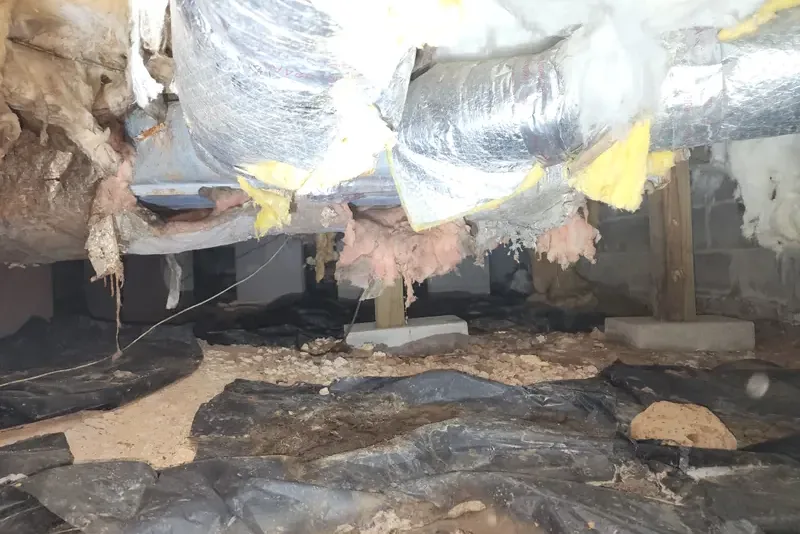
Building scientists estimate that a significant share of the air circulating in a typical home originates from the crawl space — particularly in homes with vented crawl spaces on clay soil. Homes built with vented crawl spaces pull outdoor air directly under the house. In a Piedmont summer, that air arrives at 85–95°F with 70–90% relative humidity. It contacts the cooler surfaces of your floor joists, subfloor, and HVAC ductwork, dropping below the dew point and condensing. Moisture accumulates. Mold follows.
Wake County’s predominant soil — Piedmont red clay (Cecil and Appling series) — holds moisture and drains slowly. Water pools around foundations after the area’s typical 43–50 inches of annual rainfall, keeping ground moisture elevated through most of the year. In a vented crawl space, that moisture has nowhere to go but into your home.
The energy consequences are direct. Every point of additional indoor humidity requires more cooling energy to remove. Homes with high crawl space moisture often have HVAC systems running nearly continuously on summer afternoons even with the thermostat set at 75°F.
Crawl space encapsulation — sealing the crawl space with a heavy-duty liner, closing the vents, and conditioning the space — typically reduces energy bills by 10–20%. Adding a crawl space dehumidifier maintains the right humidity range (40–60% relative humidity) year-round and takes the load off your central HVAC. For a deeper look, see Sealed vs. Vented Crawl Space in NC: What Homeowners Need to Know.
Duct Leakage
Your ductwork is the delivery system for every dollar of conditioned air your HVAC produces. In a typical home, 20–30% of the air that moves through the duct system is lost through leaks, holes, and poorly connected joints before it reaches the rooms it was meant to condition.
Think about what that means in practice. If your HVAC system is running and 25% of the conditioned air is escaping into the crawl space or attic rather than reaching your living room, your system has to run 25% longer to do the same job. You’re paying for comfort that never arrives. Meanwhile, the rooms farthest from the air handler often stay stuffy and warm while the thermostat reads 74°F.
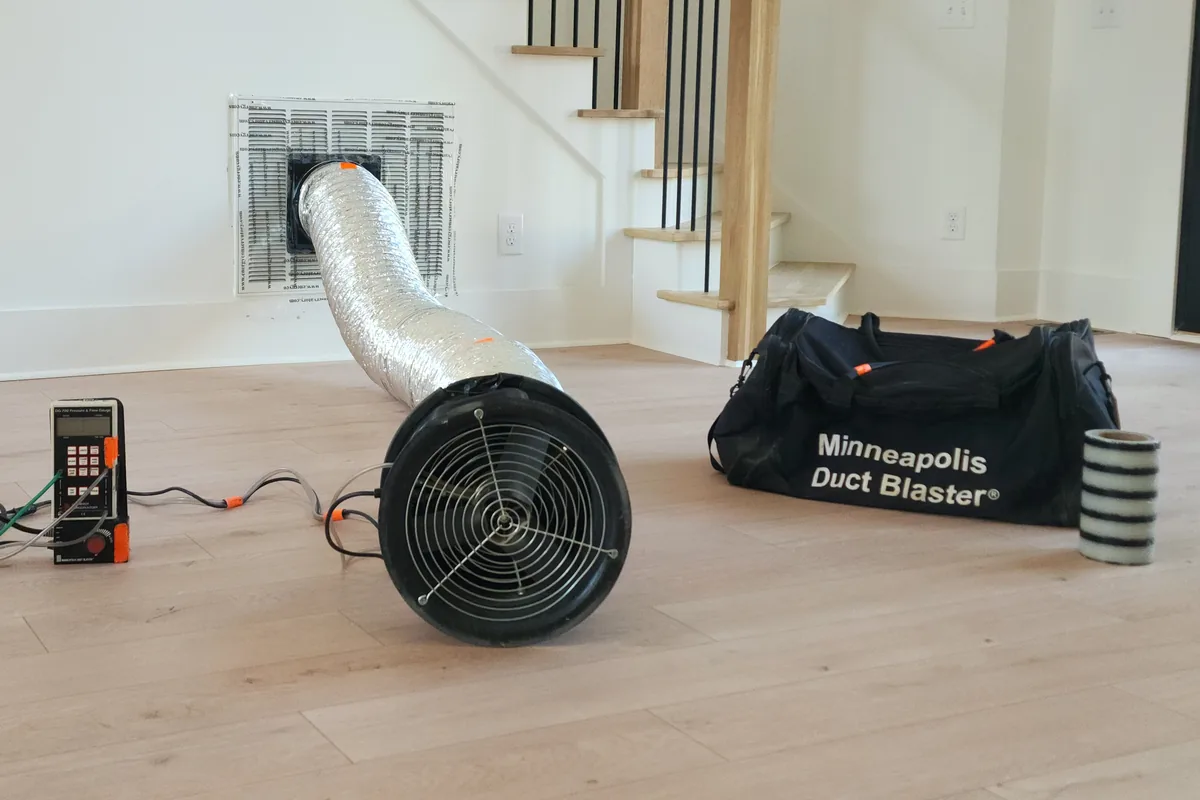
Duct leakage is measured with a duct blaster test, which pressurizes the duct system and quantifies the loss as CFM25 (cubic feet per minute at 25 pascals). NC building code requires ≤4 CFM25/100sf for new construction. Many older homes measure 2–5 times that rate. Sealing leaks with mastic sealant at joints and connections — not duct tape, which fails within a few years — can reduce energy bills by 10–30% depending on how leaky the system was to start.
Aging HVAC Equipment
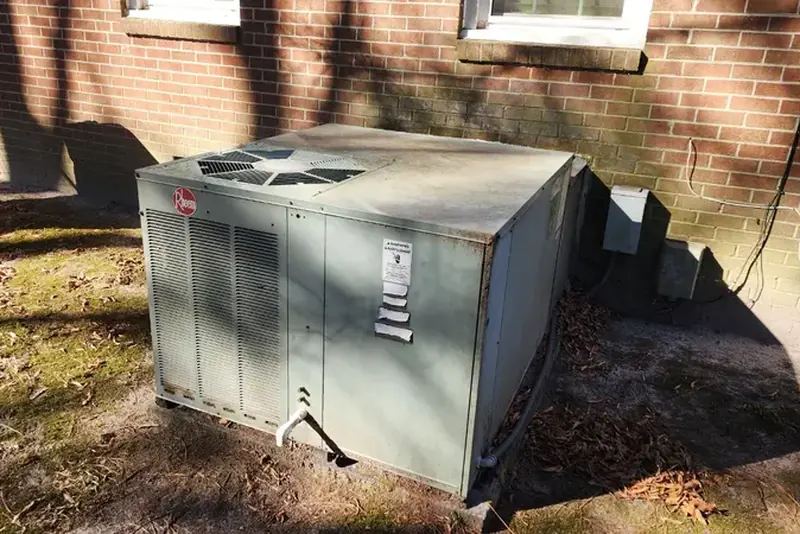
A 15-year-old heat pump or air conditioner operates meaningfully less efficiently than modern equipment, even if it’s well-maintained. Components like the compressor degrade gradually — the system still runs, it just runs longer and harder to maintain the same temperature. A proper HVAC airflow test answers the question of whether your current system is working at its rated efficiency, rather than leaving you to guess.
Phantom Loads and Appliance Inefficiency
Devices that draw power while not in active use — game consoles, older televisions, second refrigerators, pool equipment — add to your bill. This is real, but it’s the smallest category on most household bills. Phantom loads typically account for 5–10% of total energy use. Addressing them is worth doing, but if your bill has climbed $50–100 per month, the building envelope issues above are far more likely to be the primary cause.
How NC’s Climate Makes the Problem Worse
Most of the country has to deal with heat or humidity. The Piedmont of North Carolina deals with both simultaneously — and the combination is harder on homes than either condition alone.
From June through September, outdoor relative humidity in the Triangle runs 70–90%. Summer temperatures regularly reach 85–95°F. When those conditions combine with a leaky building envelope — unsealed crawl spaces, gaps in the attic, ductwork that distributes unconditioned crawl space air — the result is a house that needs far more cooling energy than the thermostat setting alone would suggest.
Here’s the mechanism: air conditioners remove heat from indoor air and exhaust it outside. They also remove moisture as a byproduct. But dehumidification is expensive. Every pound of water vapor your AC removes required energy to pull out of the air — energy that doesn’t show up as a temperature drop, just a lower humidity reading. In a home where the crawl space is continuously supplying humid air to the living spaces, your AC is fighting a problem it was never designed to solve alone.
This is also why hollow fixes — setting the thermostat higher, buying a portable fan — don’t move the needle much on bills. You can raise the setpoint to 78°F, but if the crawl space is introducing 90% humidity into the house, your AC still has to run hard to manage the moisture load.
How to Find Out What’s Causing Your High Bill
Understanding the categories above helps, but there’s a gap between “my attic might be the problem” and “my attic has two unsealed HVAC penetrations that are the primary cause of my high bills.” Closing that gap is what a home energy audit does.
A thorough audit doesn’t start with recommendations — it starts with measurement.
Blower door test. A calibrated fan is temporarily mounted in an exterior door and depressurizes the house to 50 pascals. The airflow reading produces your home’s ACH50 number — a precise measure of how much air leakage you have. Combined with thermal imaging, the technician walks the house and locates specific leak points: the attic hatch acting as a chimney, the rim joist that was never insulated, the floor penetration around the plumbing stack.
Duct leakage test. The duct blaster connects to your duct system and measures how much conditioned air is escaping. This produces a CFM25/100sf reading you can compare directly against code requirements and use to calculate roughly how much money is leaking out of your ductwork annually.
Thermal imaging. An infrared camera shows temperature differentials across walls, ceilings, and floors that are invisible to the naked eye. During a blower door test, thermal imaging reveals exactly where air is infiltrating — turning a general “you have leaks” finding into a specific map of what to seal.
Crawl space assessment. Humidity readings, vapor barrier condition, HVAC duct condition, and moisture intrusion indicators tell you whether the crawl space is contributing to your comfort and efficiency problems.
The result is a prioritized list of improvements with realistic cost and savings estimates — not a salesperson’s intuition, but a diagnostic finding. That’s the difference between guessing and knowing.
What Typical NC Energy Improvements Actually Save
These are realistic ranges based on EPA ENERGY STAR data and market experience. Individual results depend on your home’s starting condition, size, and the quality of the installation.
| Improvement | Typical Savings on Heating & Cooling | Notes |
|---|---|---|
| Attic air sealing + insulation | 15–20% | EPA ENERGY STAR estimate for combined air sealing and insulation |
| Duct sealing | 10–30% | Higher end for homes with severe leakage |
| Crawl space encapsulation | 10–20% | Primary mechanism is reduced humidity load on HVAC |
| Combined air sealing + insulation + duct sealing | 20–35% | Building science effects compound across measures |
These improvements also tend to reduce HVAC runtime, which extends equipment life and reduces maintenance costs — savings that don’t show up on the energy bill but are real.
After completing improvements, energy monitoring tracks actual usage over time and confirms whether repairs delivered the expected savings. It’s the verification step that most contractors skip — and the reason homeowners often wonder years later whether their investment actually paid off.
Frequently Asked Questions
Why did my Duke Energy bill go up so much this year?
Two things are happening at once. Duke Energy bills in North Carolina have risen approximately 22% since 2020, and Duke Energy Progress has filed for an additional 15–18% residential increase over 2027–2028, with the NCUC expected to rule this fall. But rates alone rarely explain the full spike. The bigger driver in most homes is energy waste built into the house itself — leaky ducts, insufficient attic insulation, and unsealed crawl spaces that force the HVAC system to work harder all summer and winter. A home energy audit can separate the rate problem (which you can't control) from the efficiency problem (which you can).
What's the fastest way to lower my energy bill in NC?
The fastest impactful fix depends on your home's specific problems. For many Wake County homes, duct sealing delivers the most immediate payback because leaky ducts can waste 20–30% of conditioned air before it reaches living spaces. Attic air sealing and insulation upgrades are a close second, typically reducing heating and cooling costs by approximately 15%. Changing filters, adjusting thermostats, and unplugging phantom loads are free and worth doing — but they won't produce the same dollar savings as fixing the building envelope. A home energy audit identifies the highest-impact items for your specific house before you spend money on repairs.
How much does it cost to fix an energy-inefficient home in NC?
Costs vary based on what your home needs. A home energy audit runs an estimated $475–$650 and gives you a prioritized list of improvements with estimated payback. Attic insulation upgrades typically cost $1,500–$3,500 depending on attic size and current insulation levels. Crawl space encapsulation — sealing the crawl space, adding a vapor barrier, and sometimes a dehumidifier — typically runs an estimated $7,500–$15,000 for a full project, depending on the size of the crawl space and scope of work. The audit is the right first step: it tells you which repairs will move the needle most for your specific home rather than leaving you to guess.
Will a home energy audit actually help me save money?
Yes — if the audit uses diagnostic tools rather than just a visual inspection. A thorough audit includes a blower door test (which measures actual air leakage in ACH50), a duct blaster test (which quantifies how much conditioned air is escaping your duct system), and thermal imaging (which locates insulation gaps and air leak pathways invisible to the naked eye). This data tells you exactly where your house is losing energy and by how much — so repairs can be prioritized by cost and payback rather than guesswork. An audit that includes these diagnostic tools is estimated at $475–$650 in the Triangle area, with duct leakage testing and HVAC airflow testing available as add-ons.
Want to Know Exactly Why Your Bill Is High?
A home energy audit from Peak Energy gives you a prioritized map of exactly where your home is losing energy — not a guess, a diagnostic. We use blower door testing, thermal imaging, and duct leakage testing to find the real problems before recommending any solutions. We've been serving Wake County homeowners for over 15 years.
Serving Holly Springs, Apex, Cary, Fuquay-Varina, Garner & the Triangle