Table of Contents
Key takeaway: If your AC runs constantly through a Triangle summer and the house still feels sticky, the problem is usually humidity, not a failing system. Your air conditioner has to remove both heat and moisture, and in the Piedmont’s 70–90% summer humidity, the moisture load is what keeps it running. The lasting fix is to stop humid air from entering the house and add dedicated humidity control.
You set the thermostat at 72°F, the air conditioner kicks on in the morning, and it does not shut off again until late at night. The rooms are cool enough, but the air feels heavy. Maybe the floors feel a little tacky and the windows fog at the corners. Your first thought is that something is wrong with the AC.
Usually, there is nothing wrong with the AC. In the Triangle, a system that runs and runs while the house still feels damp is almost always fighting a humidity problem the equipment was never designed to solve alone. Understanding the difference between a heat problem and a moisture problem is the key to fixing it for good.
Why Your AC Runs Constantly in a Triangle Summer
Your air conditioner removes two kinds of heat. It lowers the air temperature, which building scientists call sensible load, and it pulls water vapor out of the air, which they call latent load. Cooling the air happens fast. Drying the air takes time on the compressor. In a Piedmont summer, the moisture load is the larger of the two, and it is what keeps your system running long after the temperature is satisfied.
Here is the part most homeowners miss. The thermostat only measures temperature. Once the air hits 72°F, the thermostat is happy, but if the relative humidity in the room is still 65%, the air feels closer to 76°F and your body never feels comfortable. So you nudge the thermostat down, the system runs even longer, and the bill climbs while the clammy feeling stays. The runtime is a symptom. The moisture is the cause.
First, Rule Out the Simple Mechanical Causes
Before blaming humidity, it is fair to check the things that genuinely break. A few mechanical issues make any AC run longer than it should, and these are HVAC service calls, not building science:
- A dirty air filter or blocked return choking airflow
- Closed or blocked supply vents in several rooms
- The thermostat fan set to ON instead of AUTO, so the blower never stops
- Low refrigerant or a failing compressor on an aging system
- A unit that is simply undersized for an extreme heat day
If your system is more than 12 to 15 years old, cools unevenly, or makes new noises, have an HVAC technician check the refrigerant charge and the equipment first. But if the AC is reasonably new, the filter is clean, and the house cools to temperature yet still feels muggy, the equipment is probably fine. You have a moisture problem, and that is a building problem.
The Real Culprit: Latent vs. Sensible Cooling Load
On a mild, dry day, almost all the work your AC does is sensible cooling. It drops the temperature, hits the setpoint, and shuts off. The small amount of moisture in the air comes out easily during those short cycles.
A humid Triangle afternoon is a different job. Outdoor relative humidity from June through September commonly runs 70–90%, and every time a door opens or humid air leaks into the house, more moisture comes with it. Now the latent load is large. Your AC has to run much longer to wring that water out of the air, and on the worst days it may never fully catch up.
There is a twist worth knowing. An oversized air conditioner actually makes humidity worse. A unit that is too large blasts the temperature down in a few minutes, satisfies the thermostat, and shuts off before it has run long enough to dry the air. That short cycling leaves the house cool and clammy, which is the most common complaint we hear in older homes with replacement equipment that was sized too big. A right-sized system that runs longer is doing exactly what it should.
Where the Humidity Comes From in Triangle Homes
If the air conditioner is removing moisture but the house still feels humid, moisture is entering faster than the system can keep up. In Wake County homes, it usually comes from three places.
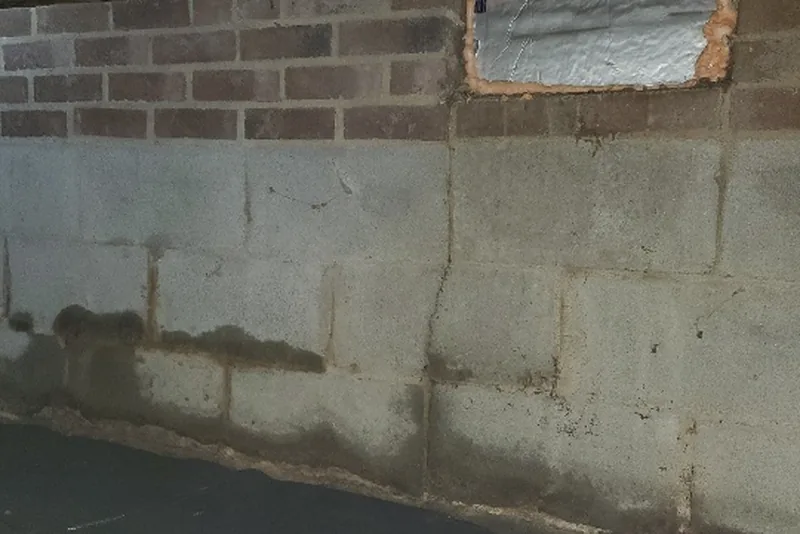
The first is the crawl space. Most homes in Holly Springs, Apex, Cary, and Raleigh sit over vented crawl spaces, and those vents pull outdoor air directly under the house. On a Piedmont summer day that air arrives at 85–95°F with 70–90% humidity, and it sits on the cool underside of your floor and your ductwork. The Piedmont’s red clay soil drains slowly and stays damp through the area’s 43–50 inches of annual rainfall, so the ground keeps feeding moisture upward. The stack effect then carries that humid crawl space air up into your living areas. For a fuller explanation of how that works, see our guide on the difference between a sealed and a vented crawl space.
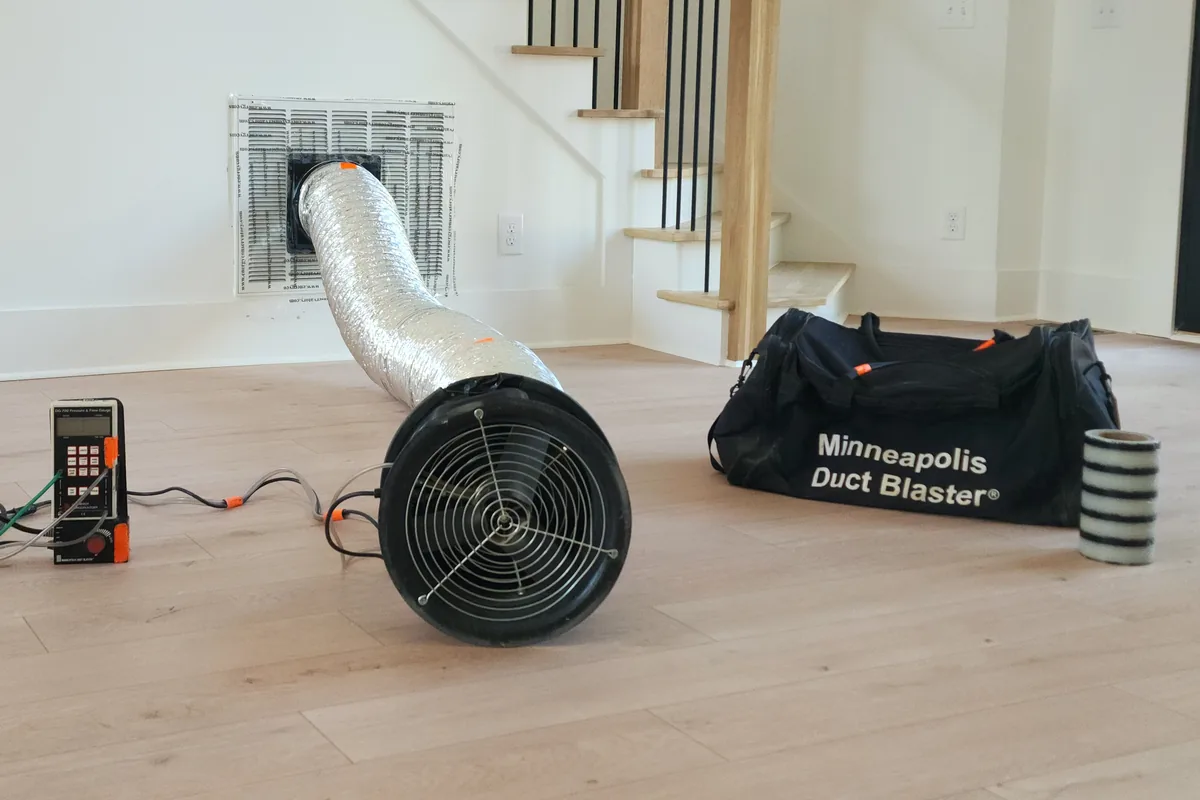
The second is duct leakage. In a typical home, DOE estimates suggest 20% or more of the air moving through the duct system escapes through leaks and loose joints before it reaches the rooms. When return ducts run through a humid crawl space or attic, they can pull that damp air straight into the system and distribute it through the house. A duct leakage test measures how much is escaping.
The third is the building envelope itself, the gaps and cracks where outside air leaks in around penetrations, rim joists, and the attic. The same humid air that drives up your bill also drives up the moisture your AC has to fight. For the bigger picture on how these add up, our post on why your energy bill is so high in NC walks through each source.
Signs It’s Humidity, Not a Broken AC
A few patterns point clearly to a moisture problem rather than failing equipment. If you notice two or more of these, the issue is humidity:
- The house reaches the set temperature but still feels sticky or heavy
- The AC runs almost nonstop yet certain rooms stay muggy
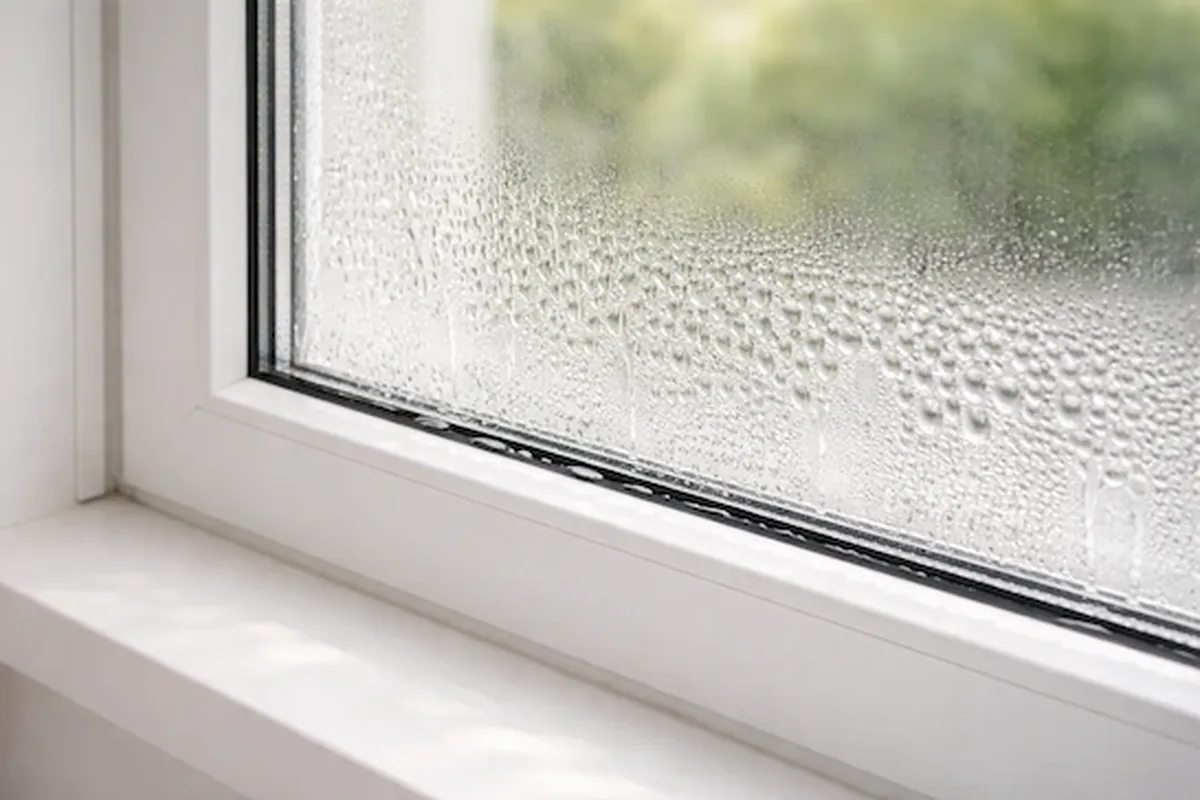
- Condensation collects at the corners of windows or on supply vents
- A musty or damp smell turns up when the system kicks on
- Floors feel slightly tacky and wood doors stick in their frames
- A hygrometer in your living space reads above 60% relative humidity while the AC is running
A simple indoor hygrometer costs very little and settles the question quickly. If the temperature is fine but the humidity sits at 60% or higher, you are looking at a latent load problem, not a refrigerant problem.
What Actually Fixes a Constantly Running AC
Peak Energy, Inc. is a building science and crawl space company in Holly Springs, NC, serving Wake County and the broader Triangle region. The approach we use for a constantly running AC follows three steps, in order.
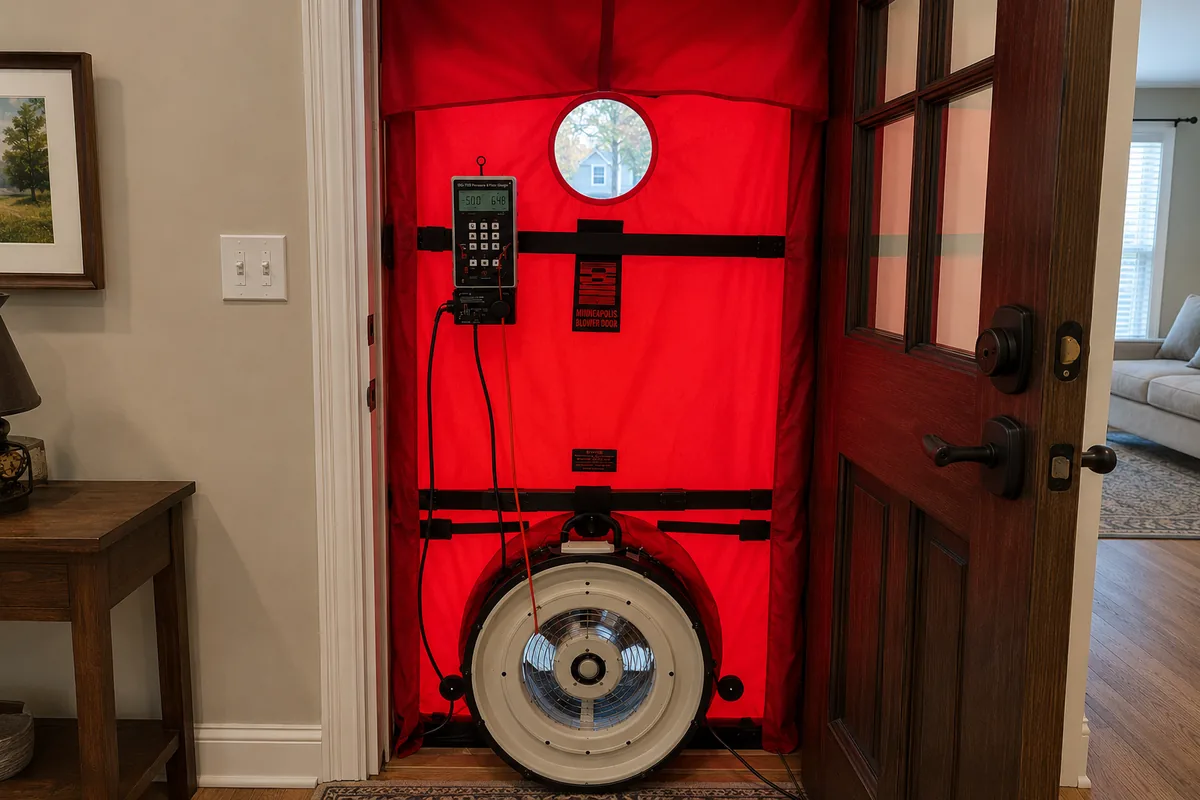
Measure first. A home energy audit uses a blower door test, duct leakage testing, thermal imaging, and a crawl space assessment to find exactly where humid air is entering and how much your ducts are leaking. An audit in the Triangle runs an estimated $475–$650 and replaces guessing with a clear picture of the actual problem. Putting a bigger AC or a portable dehumidifier on the problem without measuring usually treats the symptom and misses the source.
Seal the source. In most Triangle homes the largest single source is the crawl space. Crawl space encapsulation closes the vents, seals the floor and walls with a heavy liner, and stops humid outdoor air from entering the house. A full encapsulation averages an estimated $7,500–$15,000, depending on the size of the crawl space and scope of work, including drainage and existing moisture conditions. Sealing duct leaks with mastic at the joints keeps the system from pulling damp air through the ductwork.
Add dedicated humidity control. Once the space is sealed, a right-sized crawl space dehumidifier holds the crawl at 40–60% relative humidity year round and takes the moisture load off your central AC. Installation typically runs an estimated $3,000–$5,000. Where the living space itself needs help, a whole-house dehumidifier ties into the HVAC system and manages moisture directly, usually an estimated $3,000–$6,000. A dehumidifier is humidity control rather than an energy-savings device on its own. The value is that your air conditioner stops running itself ragged trying to do a job it was never built to do alone.
Done in that order, the result is a house that holds a comfortable 45–55% relative humidity, an AC that cycles normally instead of running all day, and rooms that feel cool and dry at 72°F rather than cool and clammy.
Frequently Asked Questions
Why does my AC run constantly but the house still feels humid?
In a Triangle summer your air conditioner is doing two jobs at once: lowering the temperature (sensible cooling) and pulling moisture out of the air (latent cooling). Removing moisture takes runtime. When outdoor humidity sits at 70–90% and humid air keeps entering the house through a vented crawl space, leaky ducts, and envelope gaps, the system can reach the thermostat temperature while the air still feels damp. So it keeps running, and the house still feels muggy at 72°F. The fix is to cut the moisture coming in and add dedicated humidity control, not to buy a bigger air conditioner.
Is it bad for my AC to run constantly in summer?
On the hottest, most humid Triangle afternoons, a correctly sized system running for long stretches is normal and good for comfort, because long runtimes dry the air. The problem is when it runs nonstop and the house still feels sticky, or it short cycles (switches on and off quickly) and never removes moisture. Constant runtime with poor comfort points to a humidity load the system cannot keep up with, an oversized unit, or both. It also adds wear and raises your cooling costs, which is worth diagnosing before something fails.
What indoor humidity should I keep in a Triangle home in summer?
Aim for 40–50% relative humidity, and keep it below 60%. Above roughly 60% RH the air feels clammy even at a comfortable temperature, and the risk of mold and dust mites climbs. Most homes with a healthy building envelope and a right-sized dehumidifier hold 45–55% RH through a Piedmont summer. If a hygrometer in your living space reads 60% or higher while the AC is running, moisture is getting in faster than the system can remove it.
Will a dehumidifier help if my AC runs constantly?
It can, but the order matters. The most effective approach is to seal the source first. In most Triangle homes that means crawl space encapsulation and sealing duct leaks, so humid air stops entering. A crawl space dehumidifier then holds the sealed space at 40–60% RH, and a whole-house dehumidifier can manage moisture in the living space when needed. A dehumidifier is humidity control, not an energy-savings device on its own. The encapsulation and air sealing are what reduce HVAC runtime. A home energy audit measures where the moisture is coming from so you fix the right thing.
Is Your AC Fighting a Humidity Problem?
If your air conditioner runs constantly and the house still feels muggy, a home energy audit from Peak Energy finds the moisture source with blower door testing, duct leakage testing, thermal imaging, and a crawl space assessment. We tell you what we see and what, if anything, needs to be done.
Serving Holly Springs, Fuquay-Varina, Apex, Cary, Raleigh, Garner, and the broader Triangle region.