Table of Contents
What R-Value Means for a Wake County Attic
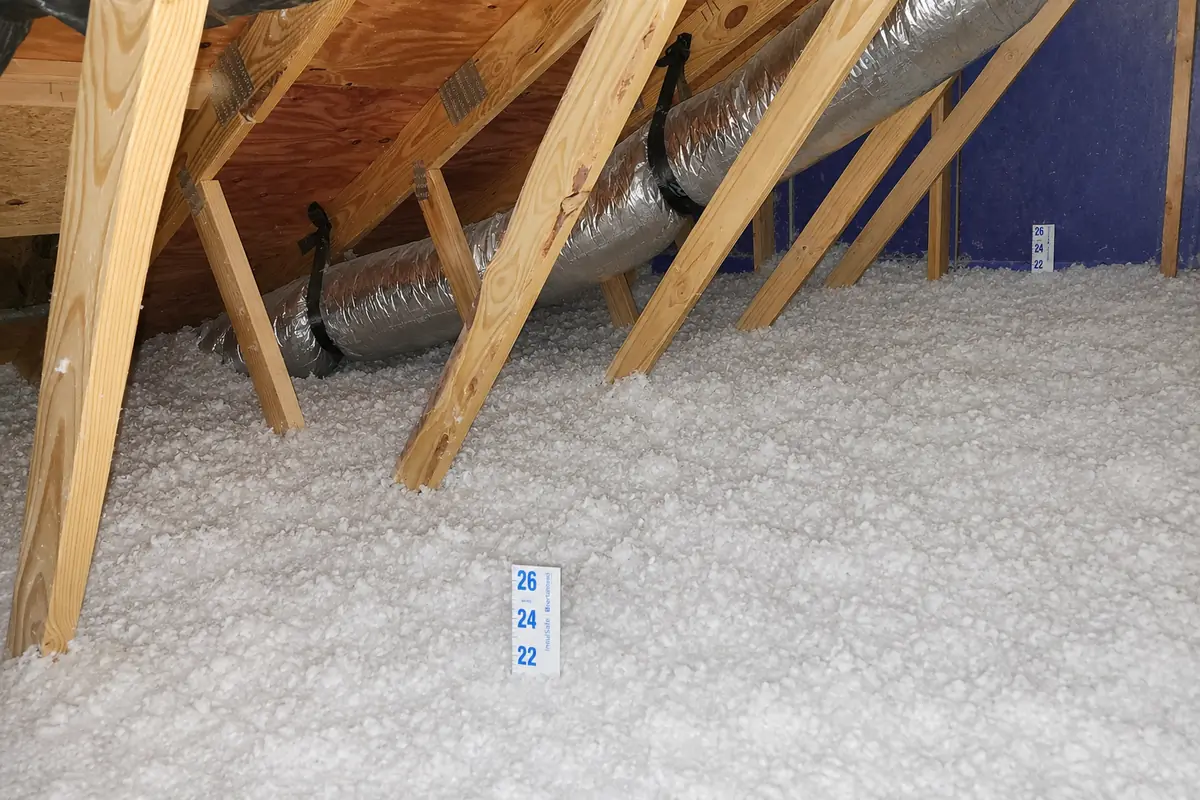
R-value measures thermal resistance: how well a material slows heat moving through it. Higher R-value means slower heat transfer. A single inch of the blown fiberglass Peak Energy, Inc. installs provides approximately R-2.7. A standard 6-inch fiberglass batt provides R-19. To reach R-49 (the level the U.S. Department of Energy identifies as cost-optimal for existing homes in Climate Zone 4A, and the target Peak Energy, Inc. recommends), you need roughly 18 inches of blown-in fiberglass.
Most Wake County homes don’t have that. Many have considerably less. In a Triangle summer, when unshaded roof decks can reach 140–160°F and attic air temperatures climb past 120°F, the gap between what your attic has and what it needs shows up directly in your cooling bills and in the upstairs rooms that never quite cool down no matter what the thermostat says.
Why Climate Zone 4A Sets the Bar at R-49
Wake County sits in IECC Climate Zone 4A, the standard classification for the North Carolina Piedmont. The zone reflects the Triangle’s climate pattern: hot and humid summers with relative humidity often running 70–90% from June through September, mild but reliably cold winters, and annual rainfall of 43–50 inches.
The 2018 North Carolina Energy Conservation Code (NCECC) sets the prescriptive attic/ceiling insulation minimum for Climate Zone 4A at R‑38 or R‑30 continuous insulation, per Table R402.1.2 as amended by NC. That threshold applies to new construction and most permit-pulled renovations, unless another compliance path (UA trade-off or ERI) is used.
The R-49 target is higher than it used to be. Homes built before NC updated its energy code in the late 2000s were often constructed to older requirements (R-19 in the early 1980s, R-30 in the 1990s and early 2000s) that are no longer considered adequate for this climate. The code moved because the data showed the older thresholds weren’t delivering the performance homeowners expected or the energy costs the modeling predicted.
What Most Existing Homes in the Triangle Actually Have
Home age is the most reliable predictor of attic insulation levels in Wake County.
Homes built in the 1970s and early 1980s, including most of older Cary, large parts of Raleigh, and some of the earliest Apex neighborhoods, were often constructed with R-11 fiberglass batts, or with blown insulation that has since settled and compressed. It’s common to find attics in this era with an effective R-value closer to R-6 to R-10 after decades of settling.
Homes from the late 1980s through mid-2000s in Holly Springs and Fuquay-Varina are more likely to have R-19 or R-30. Some have more; many are at the lower end. At R-19, the home is losing roughly three times more heat through the ceiling than a properly insulated home.
Homes built after approximately 2009, when NC adopted energy code requirements pushing toward R-38, are generally closer to compliance, though not always at R-49. Some builders met the minimum in effect at time of construction and have not upgraded.
The practical picture, roughly:
| Home era | Likely attic R-value | Gap to R-49 target |
|---|---|---|
| 1970s–1985 | R-6 to R-19 (settled) | 30–43 points short |
| 1986–2005 | R-19 to R-30 | 19–30 points short |
| 2006–2015 | R-30 to R-38 | 11–19 points short |
| 2016–present | R-38 to R-49 | At or near code |
These are ranges, not guarantees. The only way to know what a specific attic has is to measure it.
What the Gap Actually Costs You
R-30 is better than nothing, but it doesn’t perform adequately in a Wake County summer. Here’s why.
The attic is the single largest thermal boundary in most one- and two-story homes. On a July afternoon, the roof deck above an under-insulated attic is transferring heat through the ceiling into the living space as fast as your HVAC system can push it back out. The system runs longer cycles, the upstairs bedrooms lag behind, and the thermostat reads one thing while the second floor feels like another.
At R-30, roughly 55–60% of that summer heat flux is stopped. At R-49, it’s closer to 80%. The difference is real: upgrading attic insulation from R-19 to R-49 in an existing Wake County home typically reduces annual heating and cooling costs by 10–20%, with older homes seeing the higher end. [Savings range is an estimate from building science benchmarks. Actual results vary by home size, HVAC efficiency, and baseline conditions.]
That percentage is more meaningful now than it was five years ago. Duke Energy rates in NC have climbed roughly 22% since 2020. A 10–15% reduction in energy use represents a larger dollar savings than it did in 2021.
Air Sealing Comes Before More Insulation
The attic floor doesn’t operate in isolation. One of the most consistent findings during home energy audits in Wake County is that attic insulation underperforms because of air bypasses: gaps that allow conditioned air to escape from the living space into the attic regardless of how much insulation sits on top.
Common bypass locations:
- Gaps around partition wall top plates, where the interior walls meet the ceiling
- Recessed light fixtures that penetrate the ceiling drywall
- Plumbing and electrical penetrations through the top floor ceiling
- Attic access hatches with no insulation or weatherstripping
Installing R-49 over a leaky ceiling plane doesn’t capture the full benefit. The conditioned air that bypasses the insulation carries energy right past the thermal barrier you’ve paid to install. Air sealing those gaps first, then adding insulation on top, is the correct sequence, and it produces better payback than insulation alone.
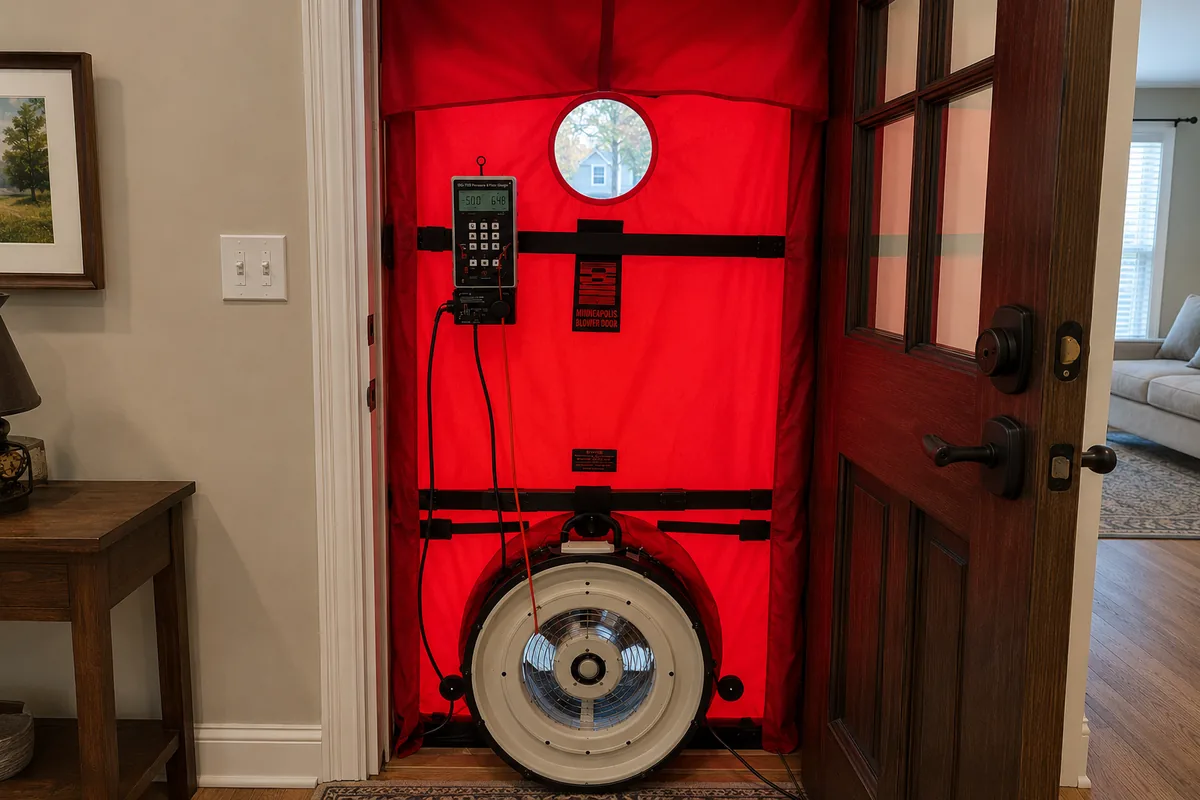
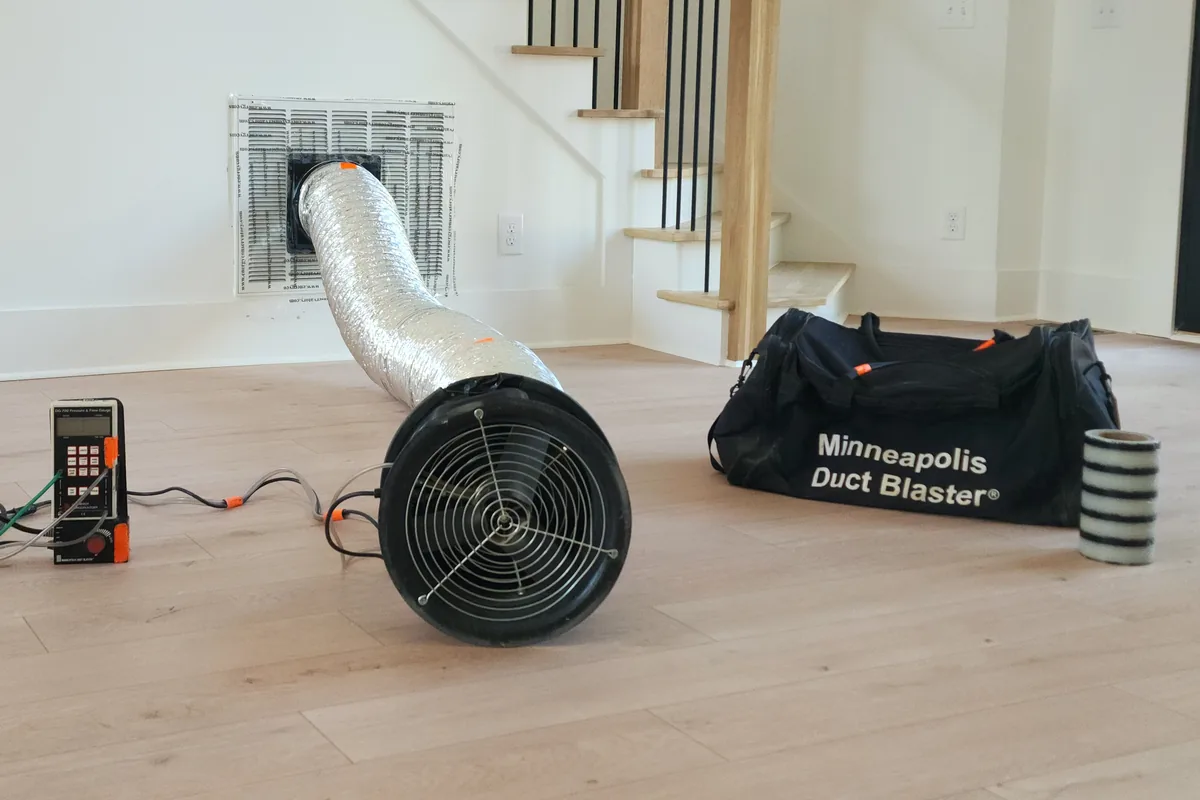
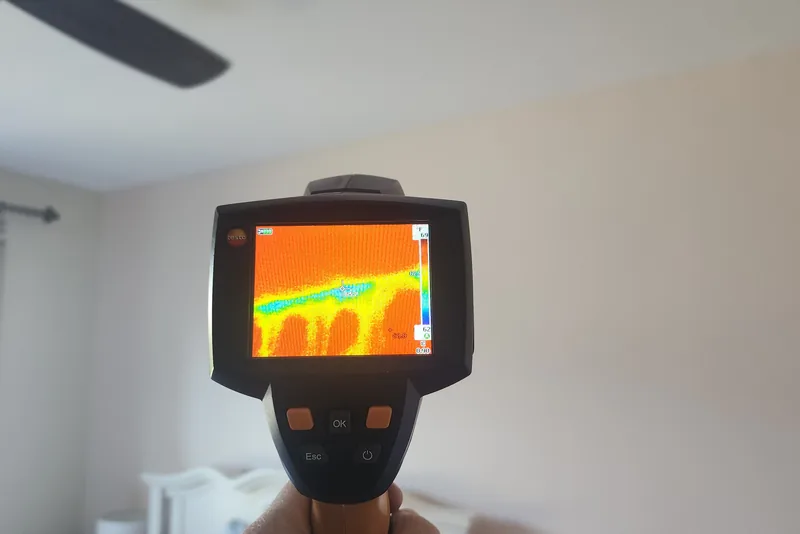
This is why a home energy audit is the right starting point for homeowners who are seriously considering attic insulation. A blower door test with thermal imaging finds the bypasses. Sealing them costs far less per unit of energy saved than any other improvement, and it makes everything else work better.
Top-Up vs. Full Tearout
Topping up (adding blown-in insulation on top of existing insulation) is the most common scenario for Wake County homes with R-19 to R-30 in the attic. If the existing insulation is dry, intact, and free of contamination, this is cost-effective and doesn’t require removing what’s already there.
A full removal and reinstall is necessary when:
- The existing insulation has been wet or contaminated by roof leaks, HVAC condensate problems, or animal activity
- Mold is present on the insulation or the attic sheathing above it
- Vermiculite insulation is present. This material, found in some pre-1990 homes, may contain asbestos and cannot simply be topped up
- The insulation has compressed to the point where it has lost most of its R-value and is no longer worth preserving
For typical mid-range Wake County homes, a top-up from R-19 to R-49 costs an estimated $3,000–$4,500. A full removal and reinstall runs approximately $5,000–$9,000. The attic insulation cost guide breaks down what drives the price in more detail. Details on what Peak Energy, Inc.’s attic insulation service involves — including the air sealing step — are on the service page.
How to Check What Your Attic Has
You don’t need an energy audit to get a rough sense of your attic’s current R-value; a tape measure and a flashlight are enough to start. Go into the attic carefully: stay on joists, never step on ceiling drywall. Measure the depth of the insulation from the top of the ceiling drywall to the top of the insulation, then use these rough equivalents for common materials:
- Blown fiberglass: approximately R‑2.7 per inch. A 12-inch depth is about R‑32; 18 inches is about R‑49.
- Fiberglass batts: 6-inch standard ≈ R‑19, 9.5-inch ≈ R‑30, 12-inch ≈ R‑38.
Also check the condition: is the insulation fluffy and at a consistent depth, or packed flat and compressed near the eaves? Any discoloration or moisture staining? Any visible gaps around can lights, bath fans, or other ceiling penetrations? Compressed, thin, or patchy insulation lowers your effective R-value and often points to air leakage issues.
If access is difficult, or you want accurate coverage across the full attic rather than a spot check, a home energy audit from Peak Energy, Inc. includes measured depth readings and thermal imaging, so you can see exactly where the biggest gaps and air bypasses are, including the hidden ones a tape measure can’t find.
Frequently Asked Questions
What R-value do I need for attic insulation in Wake County, NC?
The 2018 North Carolina Energy Conservation Code sets the prescriptive minimum at R-38 for Climate Zone 4A, which covers Wake County and the broader Triangle region. That applies to new construction and most permit-pulled renovations. The U.S. Department of Energy and Peak Energy, Inc. recommend R-49 as the cost-optimal target for existing homes in this climate: the level that delivers the best payback on energy savings relative to installed cost.
How many inches of blown fiberglass do I need to reach R-49?
The blown fiberglass Peak Energy, Inc. installs provides approximately R-2.7 per inch. To reach R-49 from scratch, you need roughly 18 inches of installed depth. If there's existing insulation, the additional depth needed is less. Your installer should provide a label on the attic hatch confirming the installed depth and R-value achieved.
Should I address my crawl space before adding attic insulation?
Both are worth addressing, and in many Wake County homes, the priority depends on what the diagnostics show. The crawl space affects indoor humidity and the moisture load on your HVAC system; the attic affects how hard that HVAC works against summer heat. If you have a vented crawl space with inadequate moisture control, it belongs on your radar alongside attic insulation. A home energy audit gives you a prioritized picture of which improvement has the better return for your specific home.
Can I add blown-in insulation on top of existing insulation?
Usually yes. If the existing insulation is dry, intact, and free of contamination, you can top up with blown-in fiberglass over most existing types. The exception is vermiculite insulation, a material found in some older homes that may contain asbestos, which requires testing and professional handling before anything else is added. If you see small gray-brown pebbles rather than fluffy batt or loose fill, have it tested before touching anything.
Not sure how much insulation your attic actually has?
Peak Energy, Inc. assesses attic insulation as part of a full home energy audit, and as a standalone attic evaluation for homeowners who know the attic is the issue. We'll measure what's there, check the air sealing, and tell you exactly what an upgrade would accomplish.
Serving Holly Springs, Fuquay-Varina, Apex, Cary, Raleigh, Garner, and the broader Triangle region.