Table of Contents
Crawl Space Mold in the Triangle: What It Is and What to Do
By early June in the Triangle, outdoor relative humidity regularly sits above 70% and climbs toward 90% on the worst days. Vented crawl spaces, the default construction in most Wake County homes, pull that air in through foundation vents. When humid air hits cooler surfaces like floor joists and subfloor sheathing, moisture condenses. Over time, that sustained moisture on wood creates the exact conditions mold needs to grow.
Crawl space mold remediation in the Triangle typically costs $1,500–$4,000, depending on the area affected and which surfaces are involved. But remediation alone is rarely the complete answer. If the crawl space stays humid after the work is done, mold returns.
Why NC Crawl Spaces Are Prone to Mold
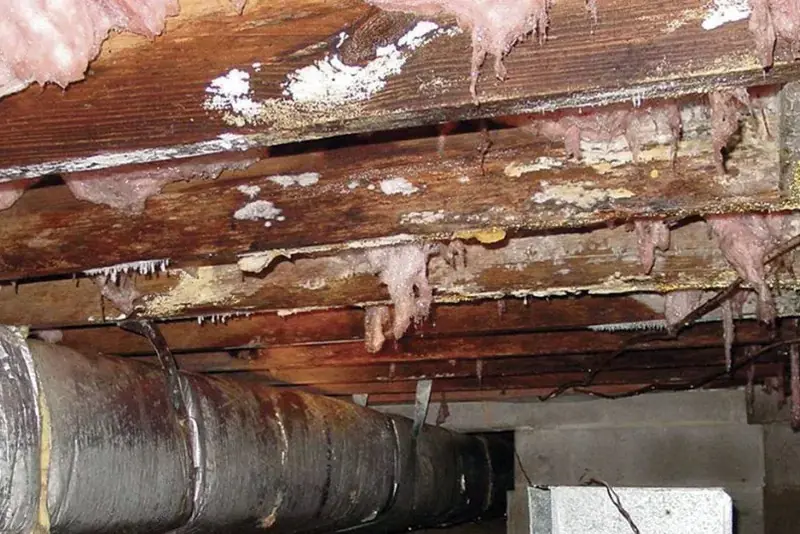
The Piedmont climate makes crawl space mold a common problem, not an unusual one. From May through September, outdoor dew points in the Triangle regularly exceed 65°F. A typical vented crawl space has no way to reject that moisture; it just collects it.
Here is the sequence that leads to mold in most NC crawl spaces:
- Foundation vents open to the outside bring in warm, humid summer air.
- That air contacts cooler surfaces below the floor assembly: wood joists, the underside of subfloor sheathing, and ductwork.
- When the surface temperature is below the dew point of the air, moisture condenses.
- Wood that stays above 19% moisture content for an extended period supports mold growth.
- Because warm air rises (the stack effect), the crawl space air, and whatever it carries, migrates upward into the living area.
Homes built before 2010 in neighborhoods like Sunset Ridge and Holly Glen (Holly Springs), Cary Park, and older parts of Garner almost always have vented crawl spaces. These homes were built to code at the time, but the code has since recognized the problem: North Carolina’s current energy code requires sealed crawl spaces in new construction precisely because vented designs fail in this climate.
Signs You Have a Crawl Space Mold Problem
Many homeowners discover crawl space mold during a home inspection or when a contractor is doing unrelated work below the house. Sometimes there are clear signals from inside the home before anyone looks.
Signs that point toward a mold problem in the crawl space:
- Persistent musty odor in the home, especially on the first floor or near floor registers, that doesn’t respond to cleaning or air fresheners
- Indoor humidity that stays above 55–60% RH even with the AC running
- Allergy or respiratory symptoms that improve when you spend time away from home
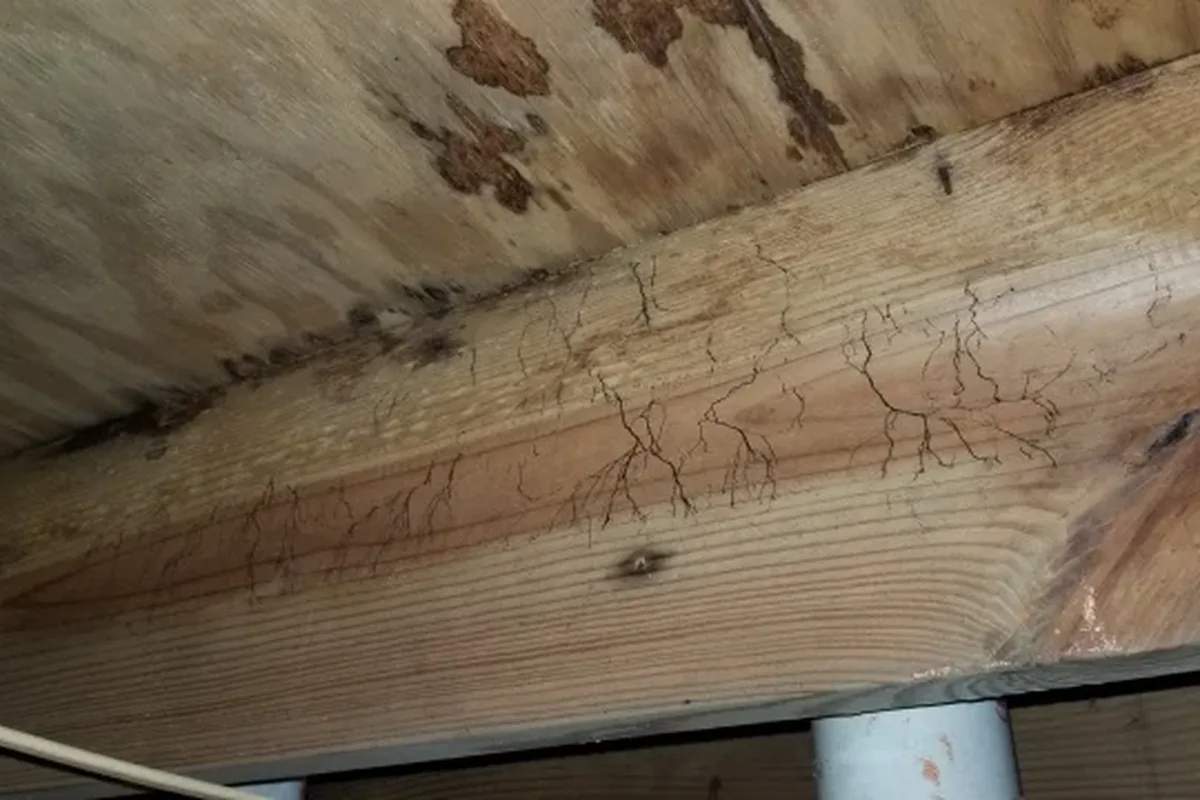
- Visible discoloration on floor joists or subfloor sheathing, appearing as dark gray, green, or black growth, or as white fuzzy patches
- Wood that looks water-stained or swollen around plumbing penetrations or in corners
- Soft spots in the floor above the crawl space, which can indicate subfloor sheathing that has been weakened by sustained moisture
Any one of these warrants a look in the crawl space. Two or more together is a strong indication that something is actively wrong.
For context on when these conditions peak, see crawl space humidity in spring: when NC homes are at risk and signs your crawl space needs encapsulation.
What Crawl Space Mold Remediation Involves
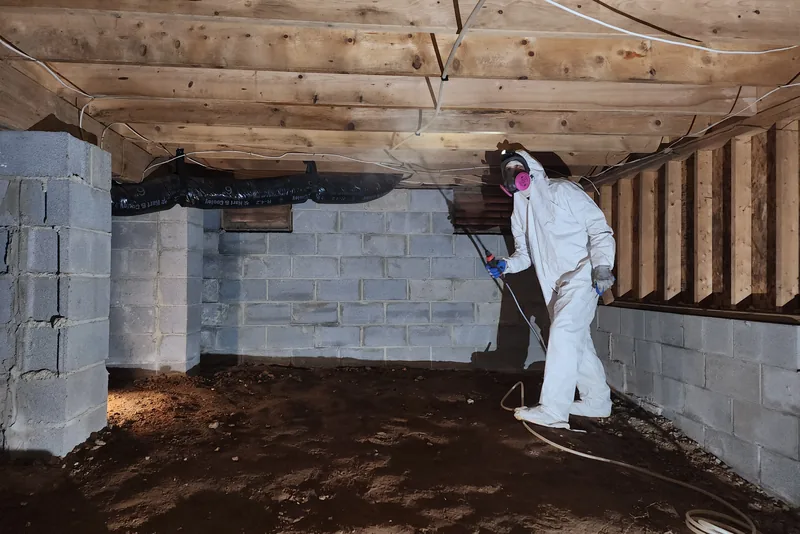
Professional crawl space mold remediation is not just spraying a bleach solution on wood. Here is what a proper job actually covers:
Assessment first. Before any treatment, a contractor needs to identify the species and extent of growth, measure the moisture content of the affected wood, and understand where the moisture is coming from. Treatment without understanding the source accomplishes nothing permanent.
Containment. If the work involves significant mold removal, the area is contained to prevent spores from spreading to other parts of the home during the remediation process. HEPA filtration captures airborne spores.
Mechanical removal. For wood that has mold growth on the surface and into the grain, wire brushing, sanding, or in some cases media blasting (dry ice or soda blasting) removes the affected material. Wire brushing alone is not sufficient for deep grain contamination.
Treatment. After mechanical removal, affected surfaces are treated with a commercial antimicrobial or encapsulant. These products inhibit regrowth on the treated surface but do not substitute for moisture control.
Clearance verification. A thorough job includes verification that the moisture content of the treated wood has returned to an acceptable range (below 19%) and that conditions no longer support mold growth.
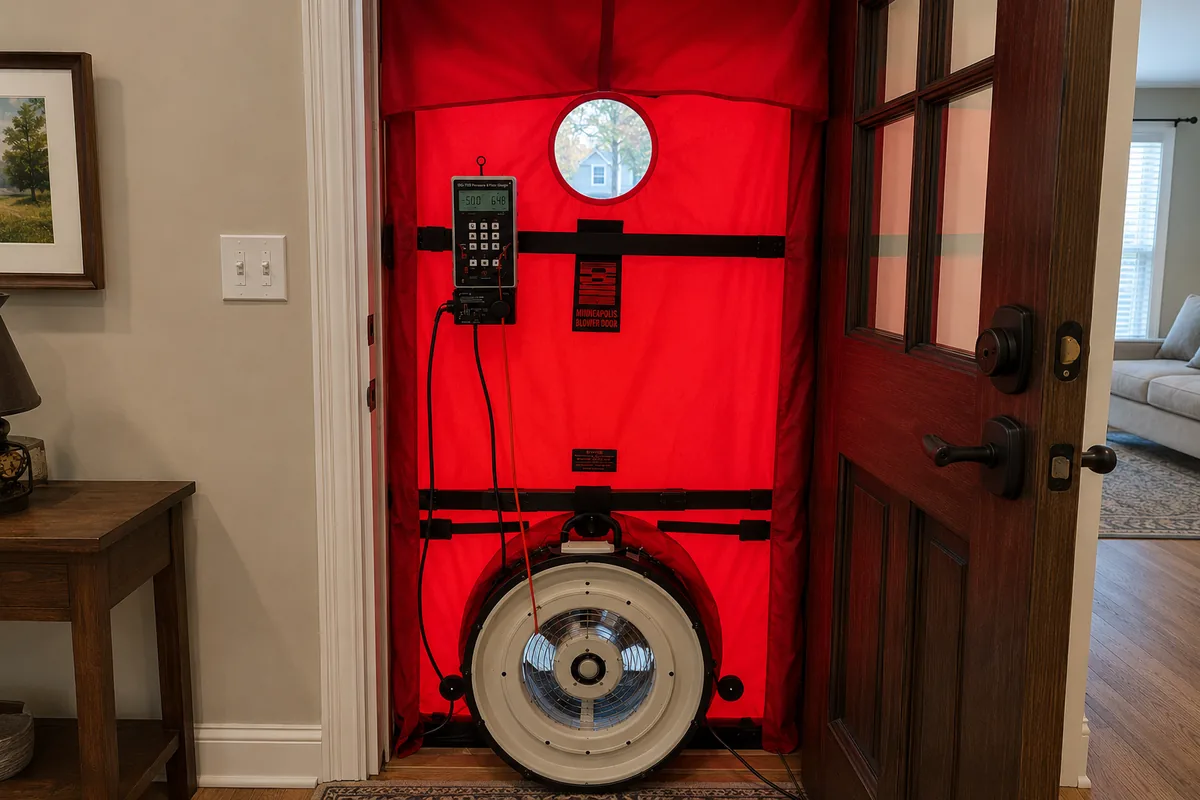
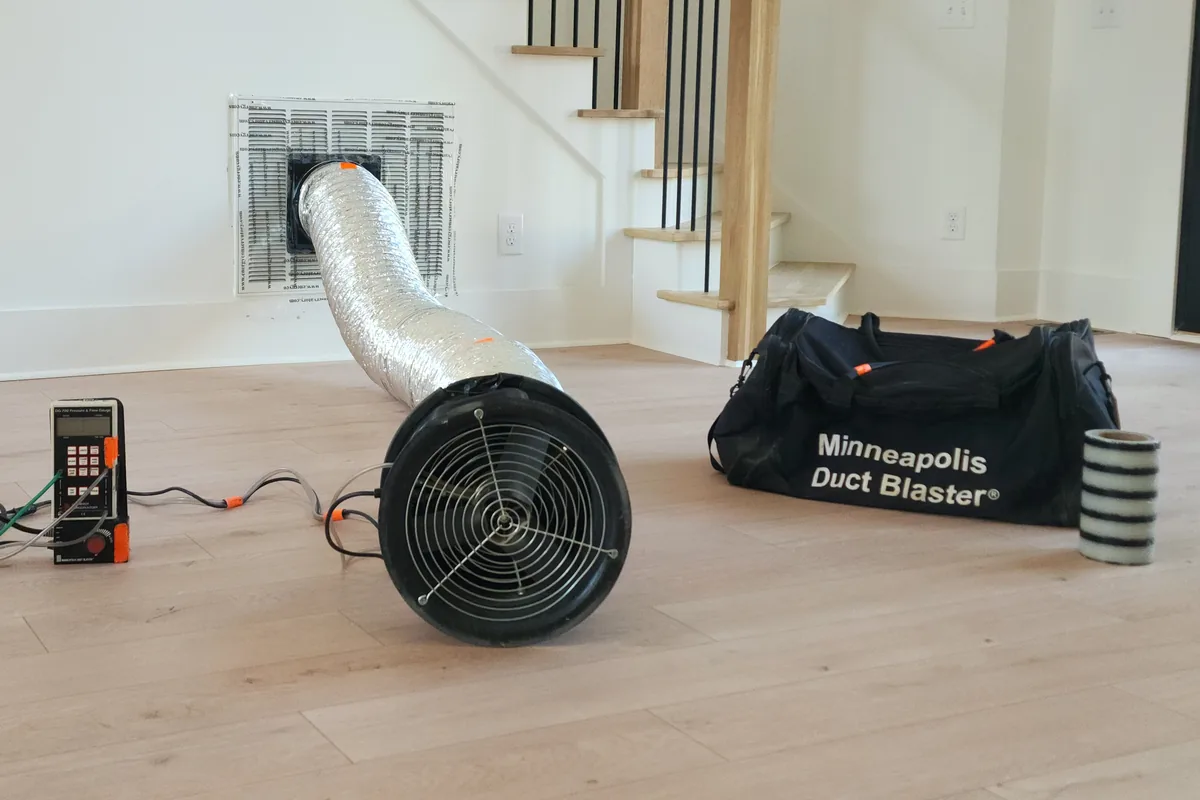
Peak Energy, Inc. in Holly Springs, NC provides crawl space assessments and mold remediation as part of its moisture control services across Wake County and the Triangle. For homes where the moisture problem involves the broader building envelope, the assessment typically includes blower door testing, thermal imaging, and duct analysis as part of a home energy audit.
Why Remediation Without Source Control Fails
This is the part of crawl space mold that contractors who only do remediation often skip.
Mold is a symptom. The underlying condition is excessive moisture in the crawl space. If you remediate the mold but leave the vented crawl space intact (foundation vents open, no vapor barrier, no mechanical dehumidification), the humidity returns with the next humid week and new mold growth begins on the treated surfaces within one to two seasons.
The correct sequence for a lasting fix:
- Remediate the existing mold.
- Seal the crawl space: close foundation vents, install a heavy-duty vapor barrier on the floor and walls, and air-seal the rim joist and all penetrations.
- Install a crawl space dehumidifier sized for the space to maintain 45–55% RH year-round.
Steps 2 and 3 together are crawl space encapsulation. Most full encapsulation projects in the Triangle run an estimated $7,500–$15,000 depending on crawl space size, existing conditions, and the dehumidifier selected. For a home that has already paid for mold remediation, encapsulation is the investment that makes that remediation permanent rather than a temporary fix.
Some homeowners ask whether they can encapsulate without remediating first. The answer is no. Sealing mold into a closed crawl space with reduced ventilation does not kill it; it can actually concentrate the problem. Remediate first, then encapsulate.
Cost of Crawl Space Mold Remediation in NC
Mold remediation in the Triangle typically runs $1,500–$4,000, depending on several factors:
- Square footage affected. A 200-square-foot area of surface growth costs less than a 1,200-square-foot crawl space with growth on most of the framing.
- Which surfaces are involved. Floor joists are straightforward to treat. Subfloor sheathing that has sustained damage may need partial replacement. Mold on ductwork or mechanical equipment adds complexity.
- Method required. Wire brushing on accessible surfaces is less labor-intensive than media blasting in a tight, low-clearance crawl space.
- Structural damage. If mold has progressed to the point where wood has lost structural integrity, joist sistering or replacement adds to the cost and scope.
The remediation cost is separate from any encapsulation work that follows. A contractor quoting both together should break out the two scopes so you understand what each piece costs.
Frequently Asked Questions
How much does crawl space mold remediation cost in NC?
Crawl space mold remediation in the Triangle typically costs $1,500–$4,000, depending on the square footage affected and which surfaces are involved. Floor joists and subfloor sheathing are the most common treatment areas. If structural damage to the wood has occurred, repairs add to the total.
Is crawl space mold dangerous?
Crawl space mold can affect indoor air quality because of the stack effect — air that enters the crawl space rises through gaps in the floor into living areas, carrying mold spores with it. Occupants with allergies, asthma, or sensitivities to mold are most likely to notice symptoms. Whether the mold in a specific crawl space is causing active indoor air quality problems depends on the species, extent of growth, and how tight the floor assembly is.
Will crawl space mold come back after remediation?
It will if the moisture source is not addressed. Remediation removes the existing mold, but if the crawl space stays humid (because it is vented, has no vapor barrier, or lacks a dehumidifier), new mold growth can begin within one to two seasons. Encapsulation and mechanical dehumidification are how you prevent recurrence.
Can I clean crawl space mold myself?
For a very small isolated patch on a hard, non-porous surface, a homeowner with proper PPE (N95 respirator, gloves, eye protection) can sometimes address it with a commercial mold cleaner. For anything covering more than a few square feet, on wood surfaces, near HVAC equipment, or with a musty odor throughout the home, professional remediation is the appropriate call. Wood is a porous material; surface cleaning does not eliminate mold that has grown into the grain.
What is the difference between crawl space mold remediation and encapsulation?
Remediation removes existing mold. Encapsulation seals the crawl space so moisture cannot get in, which prevents mold from returning. They address different problems. For homes with active mold, the correct sequence is: remediate first, then encapsulate. Encapsulating over existing mold traps the problem rather than solving it.
If you are seeing signs of mold in your crawl space, or just noticed a musty smell you cannot explain, the right first step is a proper assessment. Peak Energy, Inc. inspects crawl spaces across Wake County and the Triangle, measures moisture levels with calibrated instruments, and explains exactly what it found and what, if anything, needs to happen.
Not sure what's in your crawl space?
Peak Energy provides crawl space assessments across Wake County and the Triangle. We bring calibrated moisture meters, not guesswork, and walk you through what we find on-site.
Serving Holly Springs, Fuquay-Varina, Apex, Cary, Raleigh, Garner, and the broader Triangle region.