Table of Contents
Key takeaway: A crawl space vapor barrier is the plastic liner that covers the dirt floor and blocks moisture from the Piedmont’s clay soil from rising into your home. It is the most important moisture-control step in a crawl space, but on its own it does not seal out the humid outdoor air that flows through open vents. Knowing the difference between a vapor barrier and full encapsulation tells you what your home actually needs.
Walk down into most older crawl spaces in Wake County and you find bare dirt, or a thin, torn sheet of plastic that has slid out of place. That dirt is not just dirt. In the Piedmont, it is a steady source of moisture that evaporates upward into the framing, the insulation, and eventually the air you breathe upstairs.
A vapor barrier is the fix for that ground moisture. It is also one of the most misunderstood parts of a crawl space. Some homeowners are told a barrier solves everything. Others pay for a full encapsulation when a barrier might have been enough. This guide explains what a vapor barrier does, what thickness to use, what it costs in the Triangle, and the point where a barrier alone stops being enough.
What a Crawl Space Vapor Barrier Does
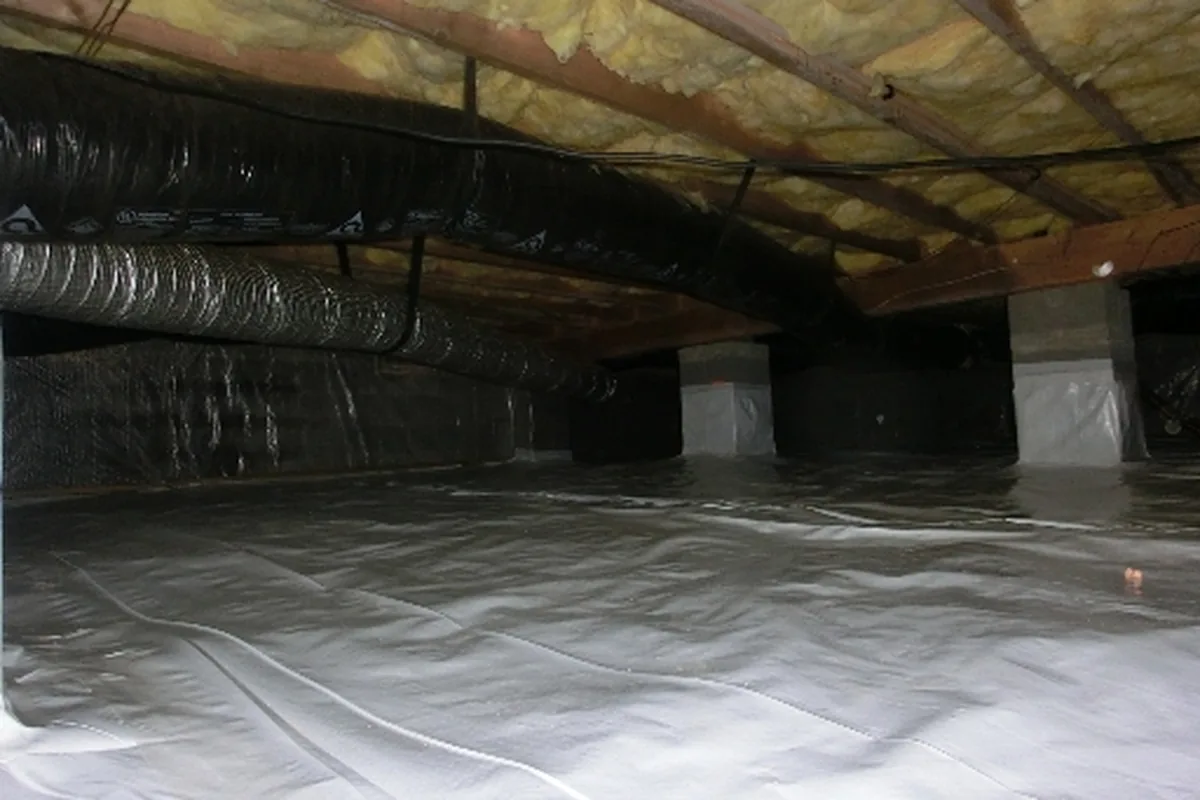
A crawl space vapor barrier is a sheet of polyethylene laid across the crawl space floor, and ideally run up the foundation walls, to stop moisture in the soil from evaporating into the space. In the Triangle, where homes sit on red clay that holds water and drains slowly through 43–50 inches of annual rainfall, that ground moisture is the largest single source of crawl space humidity. The barrier blocks it at the source.
Without a barrier, soil moisture moves into the crawl space around the clock. It raises the relative humidity, settles on the cool wood framing and ductwork, and over time feeds mold and wood rot. A properly installed barrier cuts that off, which is why it is the foundation of almost every crawl space moisture plan, whether you stop there or go all the way to encapsulation.
Vapor Barrier vs. Full Encapsulation
This is the distinction that matters most, because the two terms get used interchangeably and they are not the same thing.
A vapor barrier is the ground cover. It addresses moisture coming up from the soil. In a Triangle home it runs an estimated $1,500–$4,000, depending on crawl space size, liner thickness, and whether it covers the walls too.
Encapsulation is the complete system. It includes a heavy liner on the floor and walls, but it also seals the foundation vents, air-seals the gaps, and adds mechanical humidity control with a crawl space dehumidifier. A full crawl space encapsulation averages an estimated $7,500–$15,000, depending on the size of the crawl space and the scope of work.
The reason the difference matters: a vapor barrier handles ground moisture, but in a vented crawl space it does nothing about the humid outdoor air still pouring through the vents. On a Piedmont summer day that air arrives at 70–90% relative humidity. If that is your situation, a barrier alone will lower the moisture load but not solve it. For a fuller comparison, see our guide on sealed vs. vented crawl spaces in NC.
What Thickness (Mil) Vapor Barrier You Need
Vapor barriers are measured in mils, or thousandths of an inch. Thicker is not necessarily better at blocking vapor, but durability is what keeps a barrier working for decades rather than tearing within a few years.
- 6-mil: North Carolina’s residential code requires a Class I vapor retarder with a 6-mil minimum on the ground for a closed crawl space. It meets code, but it is thin, tears easily, and rarely survives anyone crawling around for future service work.
- 10 to 12-mil reinforced: A common upgrade. The reinforcement grid resists tearing and holds up far better than plain 6-mil poly.
- 20-mil: The standard for full encapsulation. It resists punctures, stands up to foot traffic, and is what you want if the crawl will be used for storage or regular HVAC service.
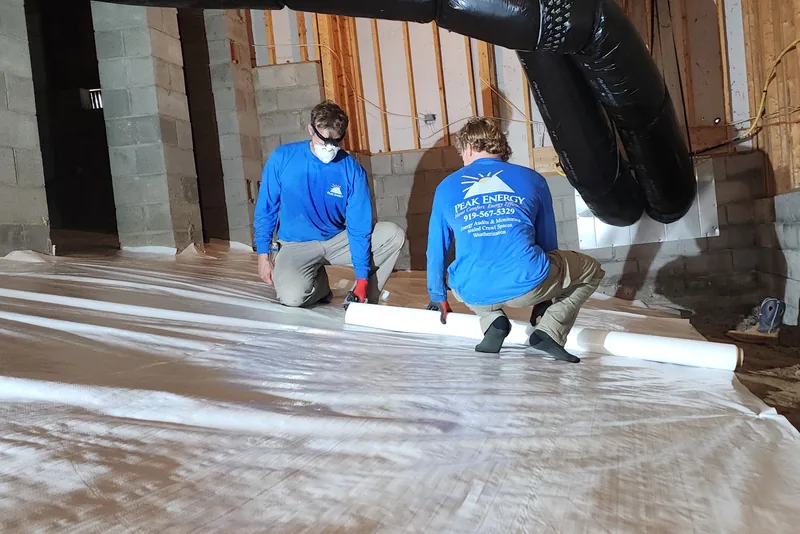
Thickness is only part of the job. A barrier is only as good as its coverage and sealing. It needs to run up the foundation walls, overlap and seal at the seams, and be sealed around piers, plumbing, and penetrations. A thick liner that is not sealed at the seams leaks moisture just like a thin one.
How Much a Crawl Space Vapor Barrier Costs in NC
A vapor barrier on its own runs an estimated $1,500–$4,000 in the Triangle. The variables that move the number:
- Square footage of the crawl space
- Liner thickness, from 6-mil up to reinforced 12 to 20-mil
- Floor only, or floor plus foundation walls
- Condition of the crawl and how much cleanout or old-material removal is needed
For comparison, a full encapsulation that adds sealed vents, air sealing, and a dehumidifier averages an estimated $7,500–$15,000. The barrier is a meaningful share of that project, which is why a standalone barrier is the budget-friendly first step for a crawl space that is otherwise dry and in good shape. Our crawl space encapsulation cost guide breaks down the full-project numbers.
When a Vapor Barrier Alone Isn’t Enough
Peak Energy, Inc. is a building science and crawl space company in Holly Springs, NC, serving Wake County and the broader Triangle region. A vapor barrier is the right starting point for most homes, but it is one piece of a larger picture. Here is where a barrier needs company, and where a true crawl space makeover comes in:
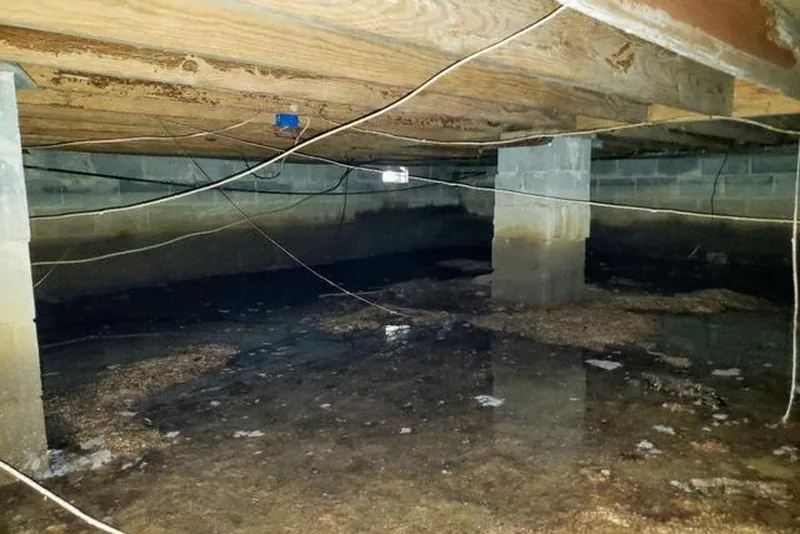
- Standing water or drainage problems. If water pools on the clay after a storm, a barrier will trap it underneath and you will still have a wet crawl space. Drainage has to be addressed first.
- Active mold. If the framing already has mold, laying a barrier over the problem does not remove it. Crawl space mold treatment, an estimated $1,500–$4,000, should happen before the barrier goes down, so you are sealing in a clean space rather than a contaminated one.
- Missing or wet insulation. Fiberglass batts sagging from the floor joists in a humid crawl trap moisture and fall over time. Crawl space insulation done correctly, an estimated $1,500–$5,000, pairs with the barrier to control both moisture and heat loss.
- High humidity from open vents. If a hygrometer in the crawl space reads above 60% through the summer, the vents are letting in humid air the barrier cannot touch. That is the point where sealing the vents and adding a dehumidifier, which together make a full encapsulation, is the real fix.
Think of it as a sequence: clean out and dry the space, treat any mold, lay the barrier, address the insulation, then control the humidity. A vapor barrier is step one of that crawl space makeover, not the whole job. A free crawl space assessment sorts out which steps your home actually needs.
Signs Your Vapor Barrier Has Failed
Many Triangle homes already have a barrier, just not a working one. These are the signs the existing barrier is not doing its job:
- It is thin 6-mil plastic that has torn, bunched, or slid out of place
- It covers only part of the floor and leaves bare dirt exposed
- The seams are not overlapped or sealed, so moisture rises between the sheets
- It stops at the floor and never runs up the foundation walls
- Water sits on top of it after rain, which points to a drainage problem underneath
- The crawl space still smells musty and humidity readings stay high
If you are seeing two or more of these, the barrier is not protecting the home and likely needs to be replaced or upgraded. Several of these are also signs the crawl space needs full encapsulation rather than just a new liner.
Frequently Asked Questions
How much does a crawl space vapor barrier cost in NC?
A vapor barrier on its own runs an estimated $1,500–$4,000 in the Triangle, depending on the size of the crawl space, the thickness of the liner, and whether it covers just the floor or also runs up the foundation walls. That is different from a full crawl space encapsulation, which seals the vents, covers the walls, and adds a dehumidifier, and averages an estimated $7,500–$15,000. If your crawl space is otherwise dry and in good shape, a quality vapor barrier is a reasonable standalone step. If it has standing water, mold, or high summer humidity, a barrier alone will not solve the problem.
What thickness vapor barrier is best for a crawl space?
North Carolina's residential code requires a Class I vapor retarder with a 6-mil minimum on the ground for a closed crawl space. Six mil meets code, but it tears easily and does not hold up to anyone working in the crawl. For a barrier that lasts, most Triangle installs use a reinforced liner in the 12 to 20 mil range, and 20-mil material is standard for full encapsulation because it resists punctures and foot traffic. Thickness matters less than coverage and sealing: the barrier needs to run up the walls, overlap and seal at the seams, and be sealed around piers and penetrations.
Is a vapor barrier the same as encapsulation?
No. A vapor barrier is the ground cover that blocks soil moisture from evaporating into the crawl space. Encapsulation is the complete system: a heavy liner on the floor and walls, sealed foundation vents, air sealing, and mechanical humidity control with a dehumidifier. A vapor barrier is one part of an encapsulation, but on its own in a vented crawl space it cannot control the humid outdoor air still flowing through the vents. For homes with ongoing moisture problems, full encapsulation is the lasting fix.
Do I need a vapor barrier if my crawl space seems dry?
Most likely, yes. Even a crawl space that looks dry on a given day sits on Piedmont red clay that holds moisture and releases it upward year round. Without a barrier, that ground moisture evaporates into the crawl, raises humidity, and feeds mold on the wood framing above. A vapor barrier blocks that path. The one caveat is that a barrier alone does not address humid air entering through open foundation vents, so in many Triangle homes it works best as the first step toward sealing the crawl space.
Not Sure Whether You Need a Barrier or Full Encapsulation?
Peak Energy provides free crawl space assessments across Wake County and the Triangle. We measure the humidity, check the soil and existing barrier, and tell you exactly what your crawl space needs, from a simple vapor barrier to a full encapsulation. No pressure, just a clear picture.
Serving Holly Springs, Fuquay-Varina, Apex, Cary, Raleigh, Garner, and the broader Triangle region.