Table of Contents
How Much Does a Home Energy Audit Cost in NC?
A basic home energy audit in the Triangle costs an estimated $475–$650, depending on your location and the size and layout of the home. That covers a blower door test, thermal imaging, and an on-site walkthrough of what was found. Duct leakage testing adds an estimated $200 per HVAC system, and HVAC airflow testing with a flow hood adds an estimated $100 per HVAC system. National pricing for a diagnostic audit generally runs between $200 and $700, so Wake County sits right in the middle of the typical band.
By mid-June in the Triangle, cooling bills are climbing and the worst of the summer heat is still ahead. If your Duke Energy bill keeps rising and you cannot explain why, a home energy audit is where the answer starts. The cost is modest compared with the improvements it points you toward, and it keeps you from spending thousands on the wrong fix.
This guide breaks down what that $475–$650 actually pays for, what pushes the price up or down, and how to tell a real diagnostic audit from a free sales inspection.
What That Price Includes
A home energy audit cost in NC reflects how much measurement is involved. The basic audit from Peak Energy, Inc. in Holly Springs, NC covers four things, with duct and airflow testing available as add-ons.
Utility bill review. If you have them available, bringing 12 months of bills lets the auditor look for usage patterns — a summer spike that points to envelope or duct problems, for example.
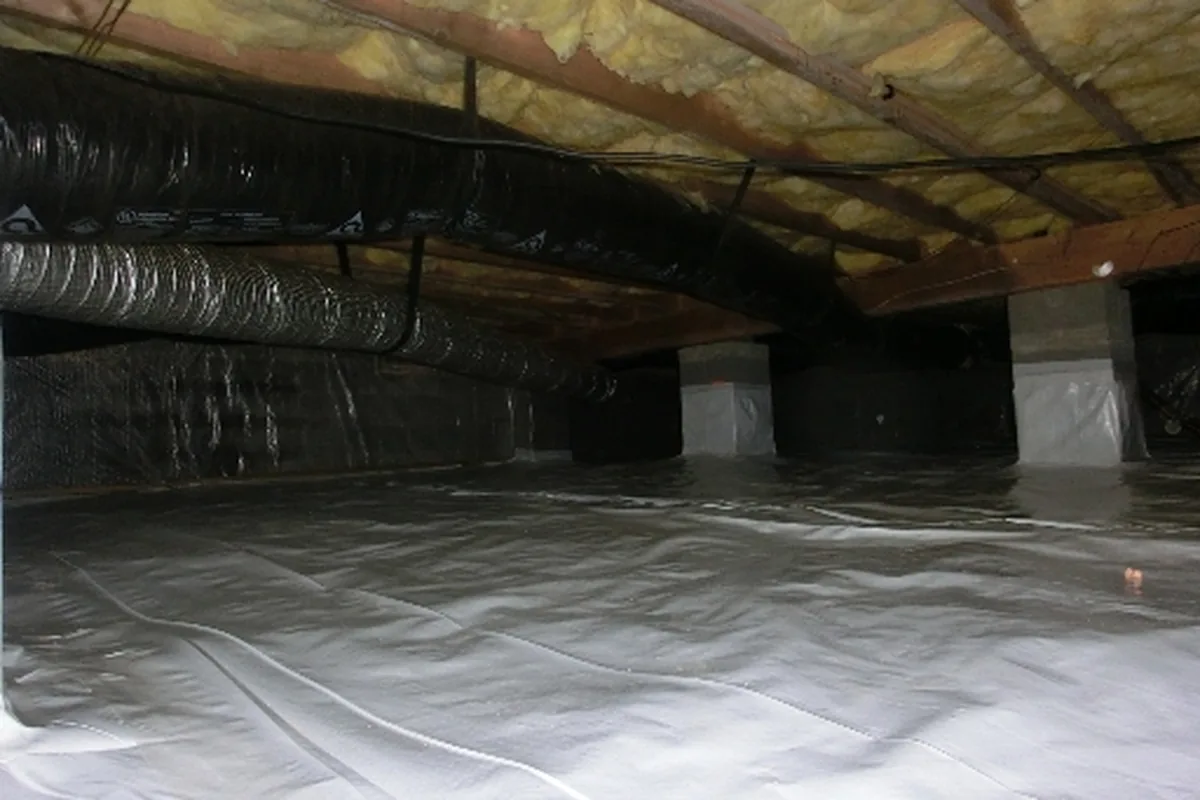
Physical walkthrough. Attic, crawl space, insulation, HVAC equipment, and living areas are all checked for condition and obvious deficiencies. This includes measuring insulation depth, looking for moisture or pest issues, and evaluating the crawl space vapor barrier.
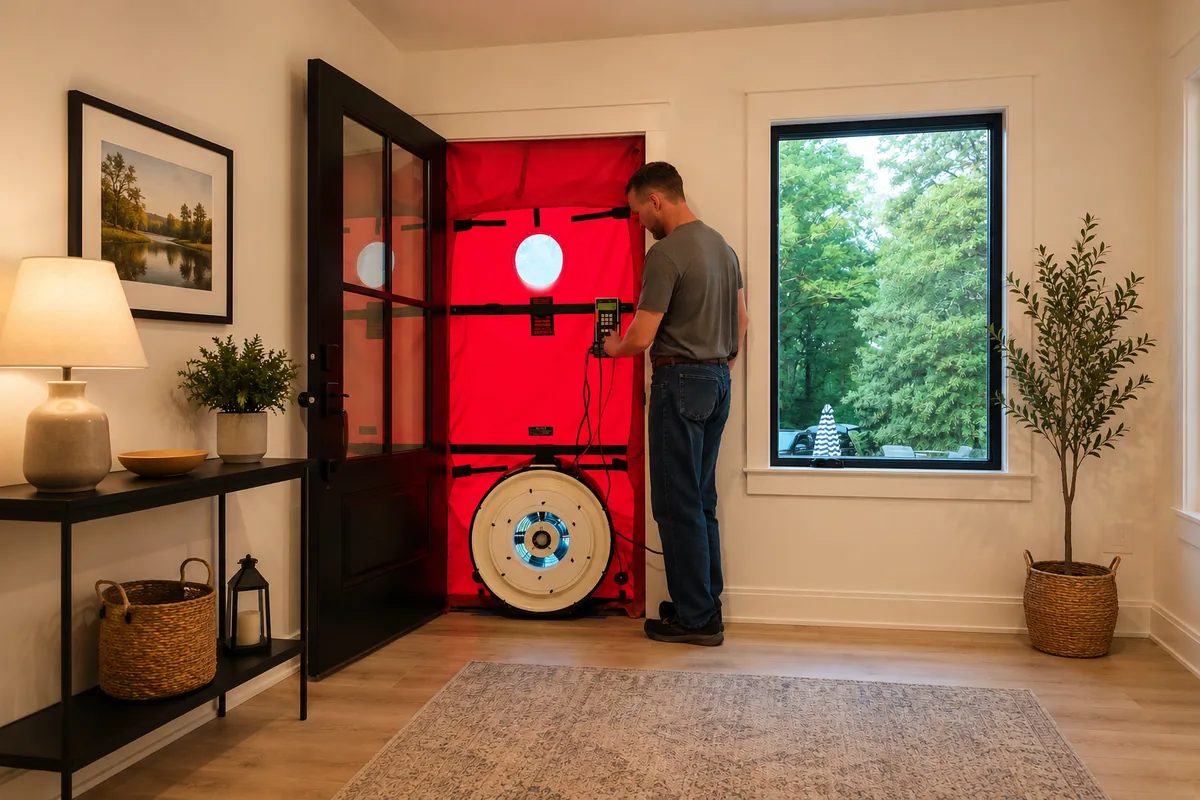
Blower door test. A calibrated fan depressurizes the home to 50 pascals and measures total air leakage in ACH50. This is the single most useful number in the audit. For the full picture of how this test works, see blower door testing.
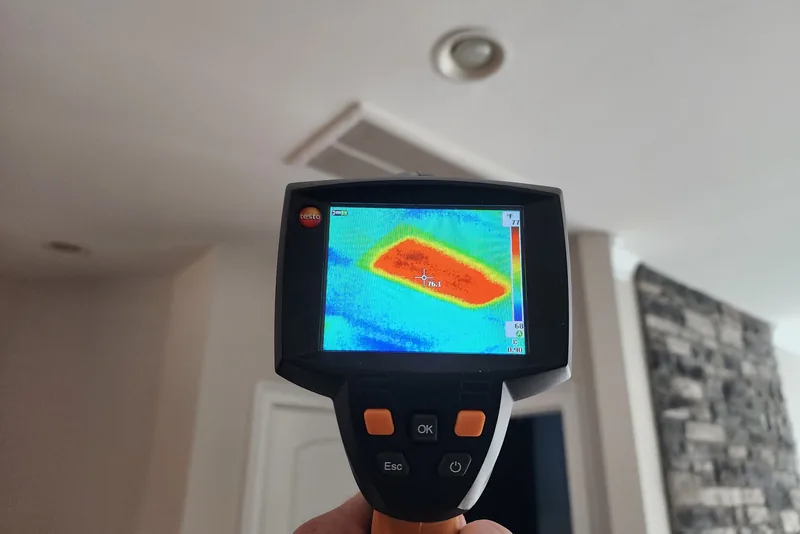
Thermal imaging. With the blower door running, an infrared camera shows exactly where conditioned air is escaping and where insulation is missing or thin.
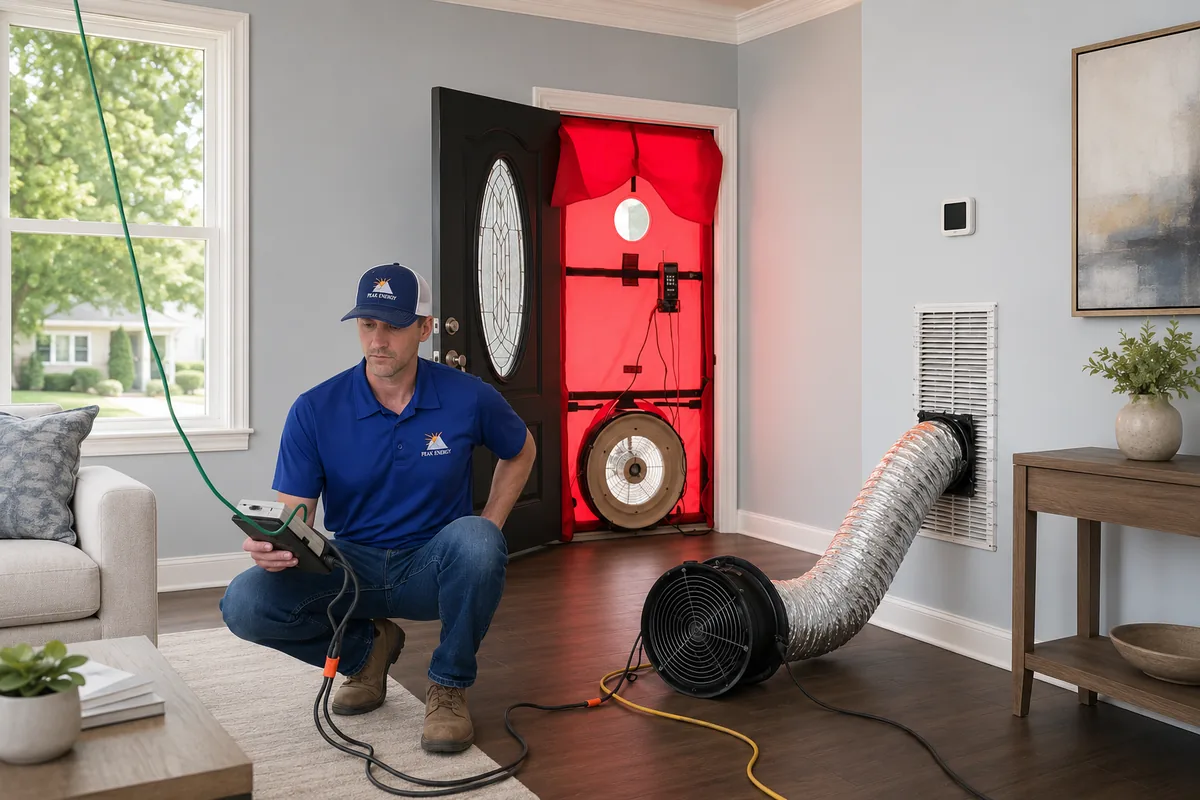
Add-ons: duct leakage and airflow testing. Duct leakage testing uses a duct blaster to measure how much conditioned air escapes before it reaches the rooms, reported in CFM25. In homes with ducts in the attic or crawl space, this is often the biggest single source of waste. Duct leakage testing adds an estimated $200 per HVAC system. HVAC airflow testing with a flow hood adds an estimated $100 per HVAC system.
Peak Energy delivers the results as an on-site walkthrough rather than a written report. You walk the home with the auditor, see the measured numbers and the thermal images, and talk through what was found. The trade-off is no glossy PDF, but a real conversation with the person who took the readings.
The basic audit runs an estimated $475–$650 depending on your location and the size and layout of the home. Adding duct or airflow testing folds those measurements into the same visit rather than separate trips.
Free Inspection vs. Paid Energy Audit
This is the distinction that confuses most homeowners, and it is the one worth getting right before you spend anything.
A free inspection is a sales tool. A contractor walks your home, looks in the attic, and writes a quote for whatever service they sell. These visits can surface obvious issues, but they rely on what a person can see with a flashlight. They do not measure anything.
A paid energy audit is a diagnostic process. Calibrated instruments put real numbers against your home: ACH50 for air leakage, CFM25 for duct loss, and a thermal map of every weak spot in the envelope. The point is not just to find problems but to size them, so you know which fix returns the most for the money.
The free version is a fine first step if you only want a second opinion. But if you are about to spend several thousand dollars on insulation, encapsulation, or duct work, the measured data from a real audit usually pays for itself by steering you to the right job first.
What Drives the Price Up or Down
Within the $475–$650 range, four factors move the number.
| Factor | Effect on cost |
|---|---|
| Home size | Larger homes take more time to test and document, which raises the price |
| Home age | Older homes have more deficiencies to find and record, adding time |
| Tests included | Adding duct leakage or airflow testing increases the price over a basic blower door and thermal audit |
| Travel distance | Homes well outside the core Wake County service area may add a travel charge |
The biggest swing is the tests included. An audit priced near the bottom of the range may cover only a blower door test and a visual look. The higher end reflects blower door, thermal imaging, and duct testing all in one visit. When comparing quotes, the question that matters is not the headline price but what is actually being measured. Ask each provider which tests are included and which cost extra, because what counts as standard versus add-on varies quite a bit from one company to the next.
Is a Home Energy Audit Worth It?
For most homes built before 2000 in the Triangle, the math works out. Homeowners who act on the recommendations typically reduce heating and cooling costs by an estimated 10–20%, and older homes with original insulation and a vented crawl space often land at the higher end of that range.
The real value is knowing what is actually wrong before you spend anything. Without measurement, it is easy to spend money on the wrong thing: adding attic insulation when leaky ducts are the actual problem, or replacing windows when air sealing the attic floor would do far more for far less. A home energy audit gives you a clear picture of your home so you can make informed decisions about what to fix first.
A newer Holly Springs home built to tighter code has less to gain than a 1980s Cary home with settled insulation and a vented crawl space. That does not mean a newer home has nothing to find. Duct leakage and missed air sealing show up in homes of every age. The audit simply tells you whether the problems are large enough to be worth fixing. If you have been wondering why your energy bill is so high, the audit is how you replace guessing with a measured answer.
Common Findings and What They Cost
The audit itself is the small number. The real spending decisions come after, which is exactly why measuring first matters. Here are the most common issues auditors find in Wake County homes and what it typically costs to address them.
Air sealing. Gaps around attic penetrations, partition wall tops, and the attic hatch. Often the cheapest fix on the list and one of the highest-return, since sealing bypasses costs little and improves comfort quickly.
Attic insulation. Many older homes run R-19 or less against a current target of R-49 for our climate zone. A top-up runs an estimated $2,500–$5,500. See attic insulation cost in NC for the full breakdown.
Duct sealing. When the duct blaster shows heavy leakage, sealing joints with mastic recovers conditioned air the system is currently losing. Peak Energy offers standalone duct leakage testing for homes and for builders who need NC code compliance.
Crawl space moisture. A vented crawl space with high humidity drives up whole-house moisture and HVAC runtime. Crawl space encapsulation averages an estimated $7,500–$15,000, depending on crawl size and scope of work.
You do not have to do everything at once, and not everything the audit finds will be worth fixing. Some improvements Peak Energy handles directly, like crawl space encapsulation and dehumidifier installation. For other work like duct sealing or attic insulation, we can help you figure out who to call and what questions to ask when getting quotes.
How to Get the Most From Your Audit Dollar
A few steps make the visit more accurate and the money better spent.
- Gather 12 months of Duke Energy bills before the appointment so the auditor can see your usage pattern.
- Write down the rooms that are always too hot, too cold, or humid, and note any musty odors.
- Clear access to the attic hatch, crawl space entry, and HVAC equipment.
- Close exterior windows and doors at least an hour before, and the blower door test will read accurately.
- Plan to be present for the walkthrough. The on-site conversation is the part you are paying for, and it is far more useful when you can ask questions in real time.
The difference between a good audit and a great one is partly the equipment and partly whether you act on what it finds. The report, verbal or written, only saves money once the work behind it gets done.
How a Peak Energy Audit Compares
Not every contractor who offers an audit owns the equipment to do one properly. Peak Energy, Inc. runs its own blower door, duct blaster, and infrared camera, and the same building-science approach applies whether the job is an existing-home audit or new-construction code testing. If you want the full step-by-step of what happens during a home energy audit, that companion guide walks through each test in detail. For the difference between a single test and a full audit, see blower door test vs. home energy audit.
FAQ
How much does a home energy audit cost in NC?
A basic home energy audit in the Triangle costs an estimated $475–$650, covering the blower door test, thermal imaging, and an on-site walkthrough of the findings. Duct leakage testing adds an estimated $200 per HVAC system and HVAC airflow testing adds an estimated $100 per HVAC system. The final number depends on your location, home size, and layout. National figures generally fall between $200 and $700, so Triangle pricing sits right in the middle of the typical band.
What is included in a home energy audit?
A standard Peak Energy audit includes a blower door test, thermal imaging, a physical inspection of the attic and crawl space, and a walkthrough of the results on-site. If you have utility bills available, the auditor will review usage patterns during the visit. Duct leakage testing and HVAC airflow testing are available as add-ons at $200 and $100 per HVAC system respectively. Results are delivered verbally, not as a written report. Watch for audits priced at the low end that include only a visual inspection with no instrument testing.
Is a home energy audit worth it?
For most older Triangle homes, yes. Homeowners who act on the recommendations typically cut heating and cooling costs by an estimated 10–20%, and often more in homes built before 2000 with original insulation and a vented crawl space. The value is the order of operations: the audit tells you which fixes matter most before you spend money on any of them, so you are not insulating an attic when duct leakage is the real problem.
What is the difference between a free inspection and a paid audit?
A free inspection is a sales visit. A technician walks the home with a flashlight and gives you a quote based on what they can see. A paid energy audit uses calibrated equipment to measure what a flashlight cannot: air leakage with a blower door, duct losses with a duct blaster, and hidden heat loss with an infrared camera. The free version finds obvious problems. The paid version tells you how big each problem is and which one to fix first.
Want to know where your home is actually losing energy?
Peak Energy, Inc. provides home energy audits across Wake County and the Triangle. We measure air leakage, duct loss, and insulation performance, then walk you through exactly what we found and what to fix first, so your next dollar goes where it returns the most.
Serving Holly Springs, Fuquay-Varina, Apex, Cary, Raleigh, Garner, and the broader Triangle region.