Table of Contents
What a home energy audit finds in a Triangle home
By mid-June in the Triangle, vented crawl spaces are pushing above 75% relative humidity and AC systems are running long cycles to keep up. When the house still doesn’t feel right (a room that won’t cool down, a bill $80 higher than last July, a faint musty smell when the system kicks on), a home energy audit identifies exactly what’s happening.
A home energy audit in North Carolina most commonly finds air leakage through the building envelope, attic insulation below current code targets, duct losses into unconditioned spaces, crawl space moisture rising into the living area, and HVAC airflow problems that the thermostat never shows. In a typical Triangle home from the 1980s or 1990s, two or three of these are present together.
Here is what each finding looks like and what the auditor is measuring.
Air leakage: the blower door result
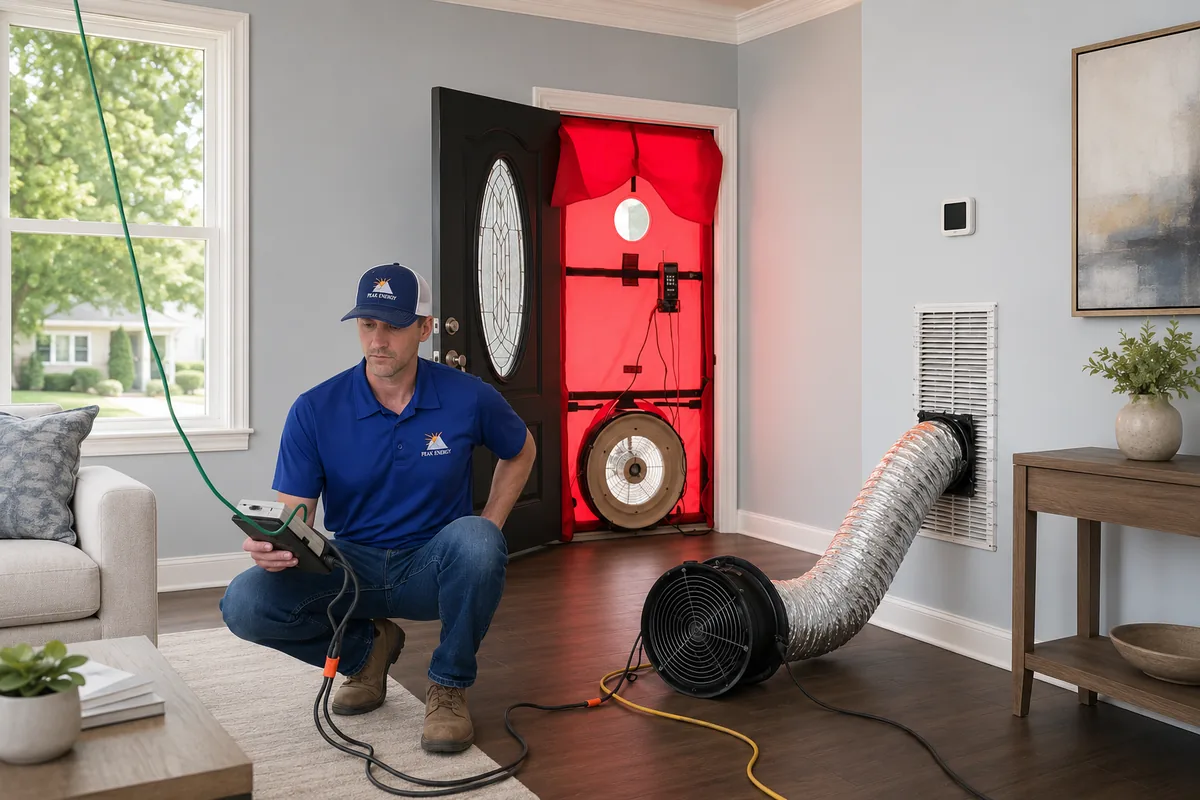
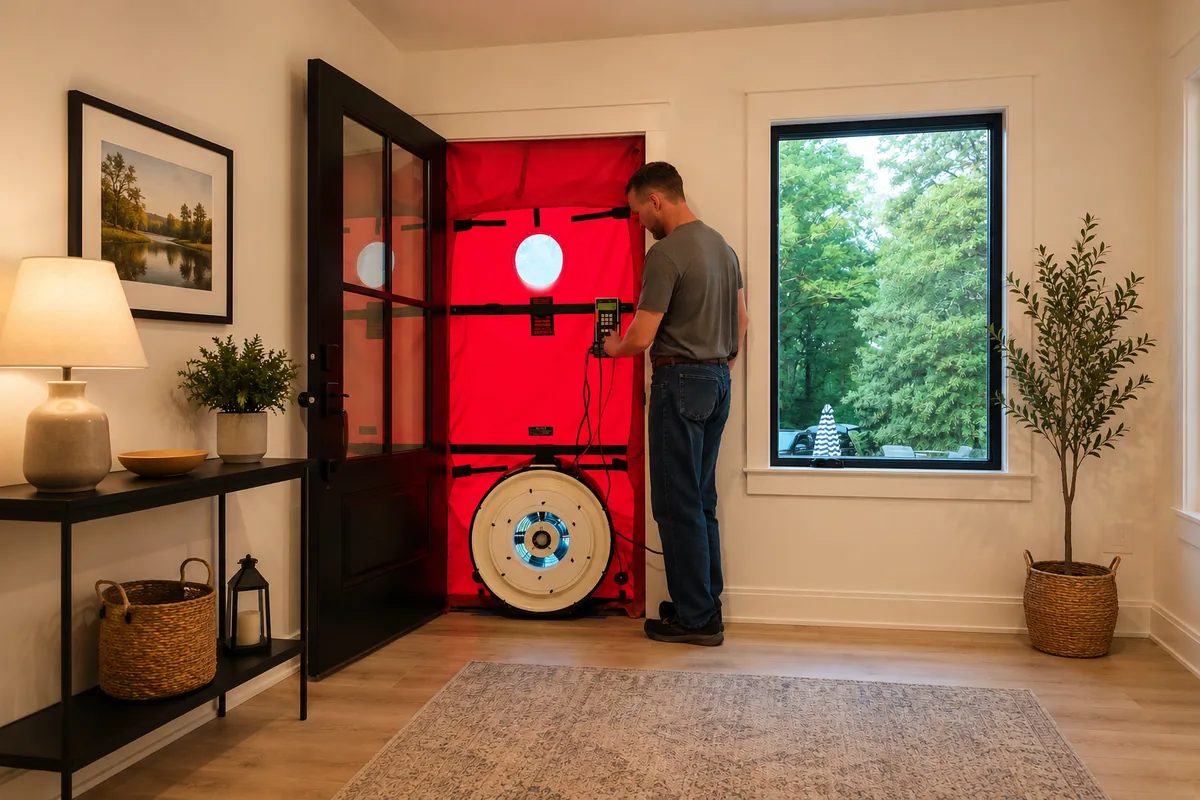
The blower door depressurizes the house to negative 50 Pascals. The fan measures how much air flows in to maintain that pressure, reported as ACH50 (air changes per hour at 50 Pascals).
NC code for new construction is 5.0 ACH50 or below. Existing homes are not required to meet that threshold, but most older Triangle homes test between 8 and 14 ACH50. Homes built before 1985 in Cary and Raleigh regularly come in above 15 ACH50.
While the house is depressurized, the auditor walks it with a thermal camera, finding where air is actually entering. The most common leak paths in Triangle homes: the attic hatch, recessed light fixtures in ceilings (each one is a direct hole to the attic), top-plate penetrations where plumbing and wiring pass through, the rim joist where the house meets the foundation wall, and HVAC supply and return boot connections.
The blower door number tells you how leaky the house is. The thermal camera tour tells you where.
Attic insulation: how far below target
The audit includes a thermal camera sweep of the ceiling from inside the living space, followed by a physical inspection of the attic. Together they show both the coverage and the actual depth of what’s installed.
The Triangle sits in IECC Climate Zone 4A. The Department of Energy recommends R-49 as the cost-optimal target for existing homes in this zone, the benchmark most Triangle energy auditors use. That is roughly 15–16 inches of blown-in fiberglass at the joist tops. Most Triangle homes built before the mid-1990s were installed with R-11 to R-19 in the attic. Some have been topped up; many have not been touched since original construction.
R-19 effective is roughly half of the R-49 target. On a July afternoon, that deficit is visible as heat radiating down through the ceiling into upper-floor rooms. The thermal camera makes it obvious.
Topping up attic insulation from R-19 to R-49 typically costs an estimated $2,500–$5,500, depending on attic square footage, access conditions, and whether air sealing is included at the top plates. If existing insulation is damaged, contaminated, or needs to be removed first, expect $5,000–$9,000 for the full project. For a detailed breakdown, see attic insulation cost in NC.
Duct leakage: conditioned air that never reaches the rooms
Older forced-air duct systems in the Triangle were built to deliver conditioned air, not to be airtight. The duct blaster test pressurizes the duct system and measures how much air escapes before reaching the supply registers.
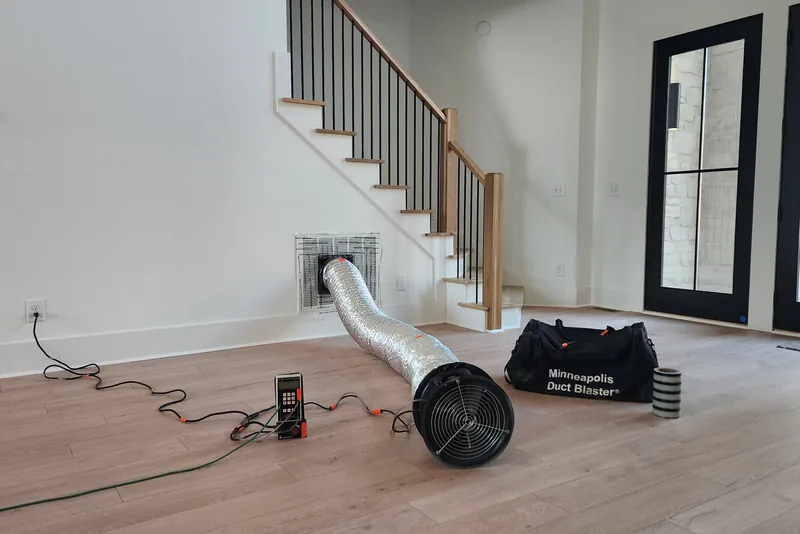
NC Energy Conservation Code caps duct leakage to outside at 4 CFM25 per 100 square feet of conditioned floor area. Many older Triangle systems test at 12–20 CFM25/100sf to outside. That works out to roughly 20–30% of the conditioned air produced by the system going into the attic, crawl space, or wall cavities before it reaches any room.
The impact is direct: the system runs longer to reach the thermostat set point, rooms on the far end of a duct run stay warmer than the thermostat location, and the energy bill is higher than the house’s size would predict. When the auditor finds duct leakage above code, it shows up in the findings with an estimated percentage of cooling capacity lost.
Crawl space moisture: the hidden load on the AC
A home energy audit always includes a crawl space inspection. In the Triangle, this step consistently produces findings that explain comfort complaints the homeowner had before the auditor arrived.
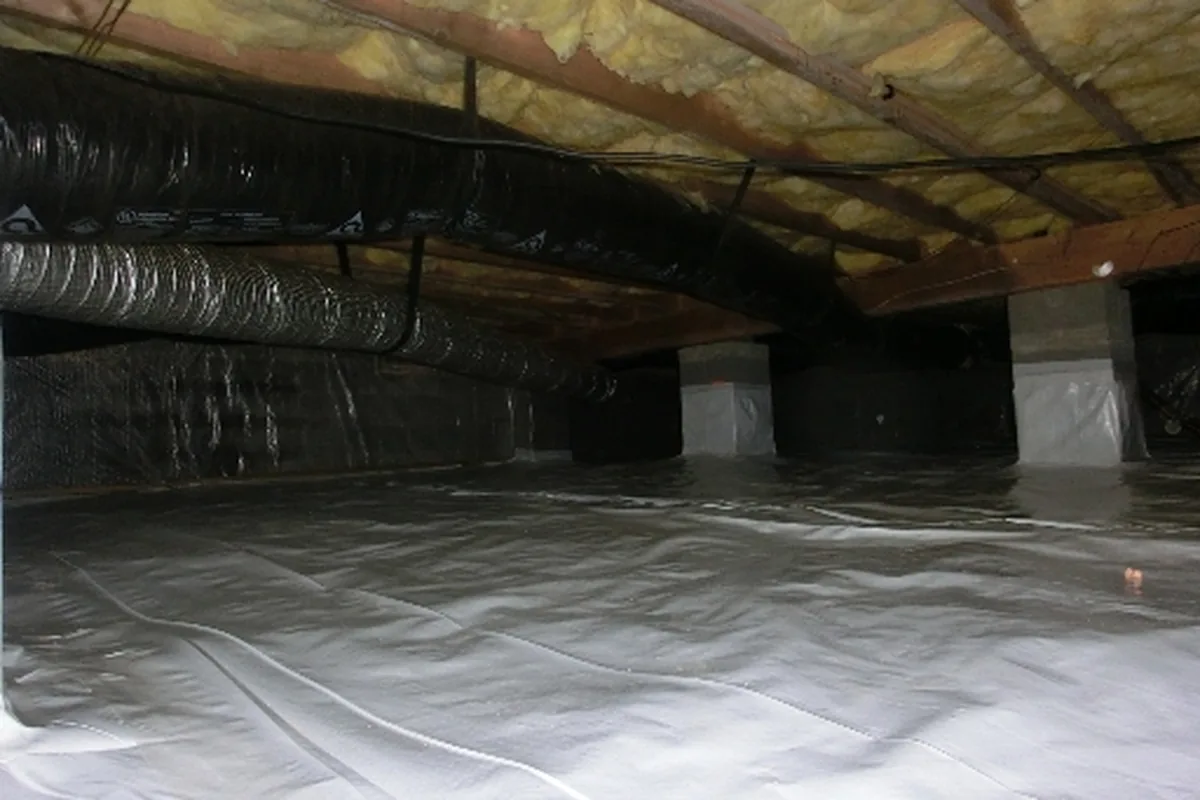
Vented crawl spaces are the default under most Wake County homes. In summer, outdoor air at 70–90% relative humidity enters through the foundation vents and meets the cooler subfloor surface above it. Moisture condenses, the soil surface releases additional moisture, and without a properly sealed vapor barrier and dehumidification, the crawl space runs persistently wet. A typical vented crawl in Holly Springs or Fuquay-Varina stays above 65% RH from May through September.
During the blower door test, the depressurized house draws air upward from the crawl space through penetrations in the subfloor (HVAC supply and return boots, plumbing lines, wiring chases) via the stack effect. If the crawl is running at 78% RH, that air is humid. It hits the living space, the AC’s latent load climbs, and the system runs long cycles without quite catching up. On a humid Triangle afternoon, the house feels sticky at 72°F.
The auditor documents RH readings in the crawl, vapor barrier coverage and condition, any standing water or visible moisture damage, and the state of any existing insulation on the underside of the joists. These findings often connect directly to the $80 bill increase or the second-floor humidity problem the homeowner mentioned at the start.
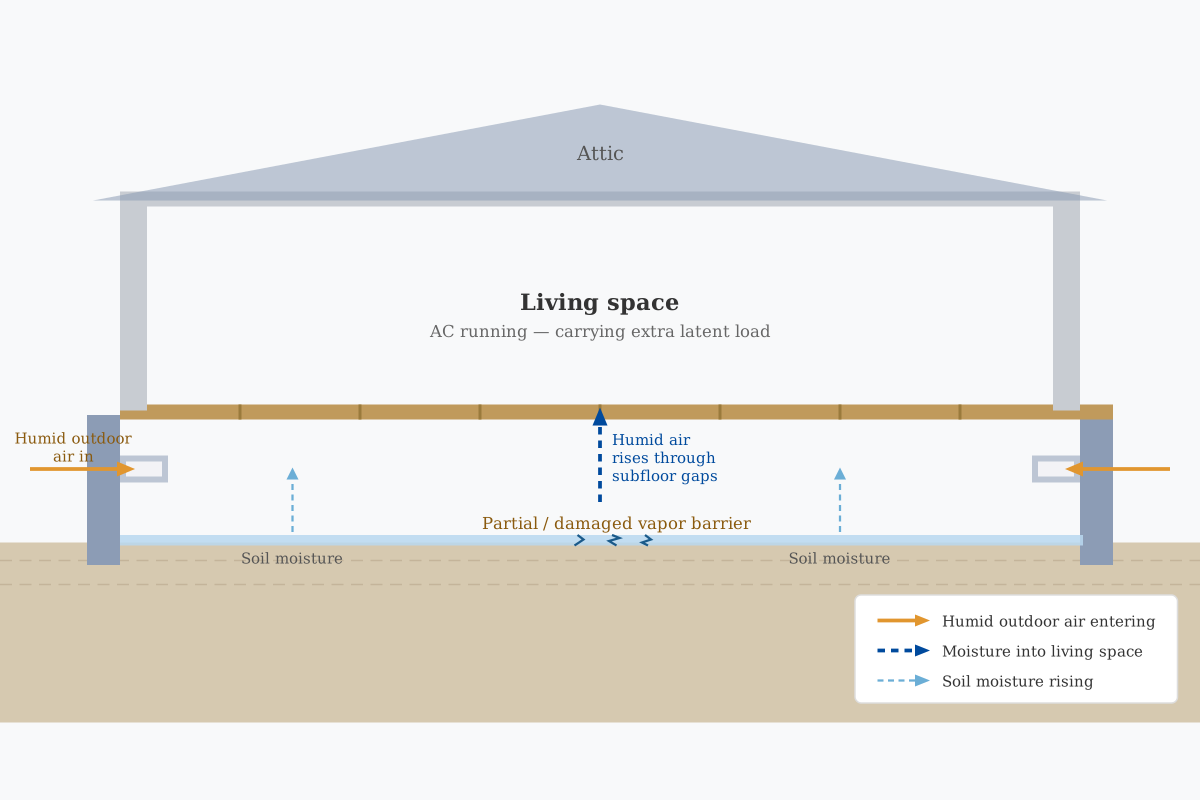
For homeowners whose audit finds active crawl space moisture, crawl space encapsulation is the long-term fix: it seals the crawl from outdoor air and pairs with a dehumidifier to maintain safe humidity year-round. In the Triangle, a full encapsulation project averages an estimated $7,500–$15,000 depending on crawl size and conditions.
HVAC airflow: what the thermostat doesn’t show
The thermostat measures one point in the house. The bedrooms at the far end of a duct run, a bonus room over the garage, a second-floor master suite. These rooms often run 3–6°F warmer than the thermostat location even with the system running constantly. That is an airflow problem, not a thermostat problem.
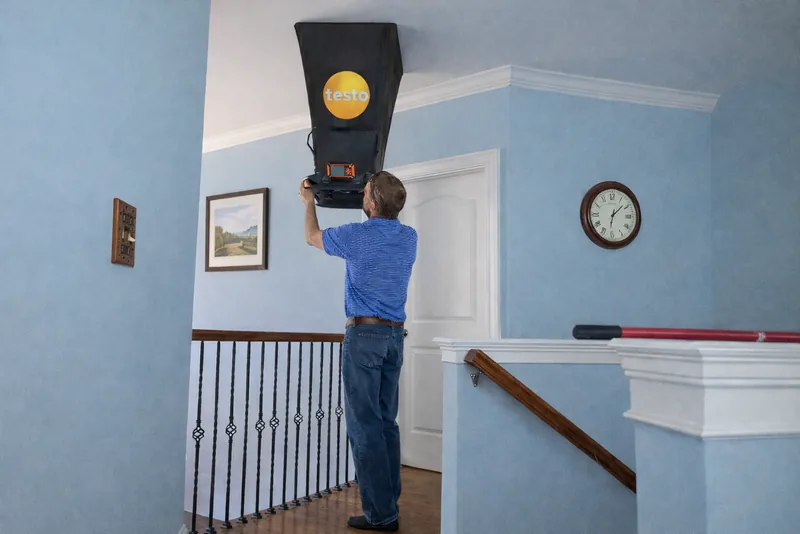
The audit includes airflow assessment: static pressure measurements in the duct system, and a check of supply and return balance across rooms. Common findings include undersized return air (the air handler cannot draw enough air back to condition it properly), oversized equipment that short-cycles (cools the thermostat sensor before the far rooms catch up), and supply registers that have been partially closed to “balance” the system, which makes the underlying imbalance worse.
Fixes range from straightforward (opening returns, adjusting dampers, sealing duct connections) to substantial (adding return air pathways, resizing equipment). The audit findings tell you where the problem actually is rather than leaving you to guess.
Electric usage: appliances and plug loads
The audit also gives you a basic overview of where your electricity is going day to day, including the major appliances and plug loads (refrigerators, water heaters, well pumps, space heaters, and the always-on electronics) that quietly add up on the bill. It is a high-level read, enough to flag an obvious energy hog or a phantom load worth addressing.
For homeowners who want this in real numbers rather than estimates, we install energy monitoring equipment that tracks consumption over time so you can see exactly what each part of the home is drawing. If detailed, ongoing visibility into your usage is the goal, we can walk through what monitoring would show and how it gets installed during the audit itself.

What the audit gives you
A home energy audit from Peak Energy, Inc. in the Triangle runs an estimated $475–$650 for the basic audit, depending on your location and the size and layout of the home. It covers the blower door test, thermal imaging, and a walk-through inspection of the attic, crawl space, and HVAC system. When your ducts or airflow need that level of detail, duct leakage testing typically adds an estimated $200 per HVAC system, and HVAC airflow measurements with a flow hood add an estimated $100 per HVAC system. Most audits are scheduled within 7 to 10 days, take two to four hours, and happen in a single visit. The audit is a comprehensive walk-through, not a form-filling exercise, and we do not send a follow-up written report afterward. Instead, the auditor answers your questions and gives you feedback in real time while at the home, walking through every finding with you on-site before leaving.
What you take home is specific: your ACH50 number, your duct leakage CFM25 if your ducts were tested, the thermal images of your ceiling and envelope, your crawl space RH readings, and a ranked list of improvements by impact and estimated payback. You know what to fix, in what order, before spending a dollar on any of it.
For homeowners who want to understand the testing process first, What Happens During a Home Energy Audit in NC covers the equipment, the tests, and the typical timeline.
FAQ
Do I have to fix everything the energy audit finds?
No. The auditor walks you through each finding ranked by impact and estimated cost so you can decide what to prioritize. Most homeowners start with the highest-impact, lowest-cost items (typically attic insulation and air sealing) and schedule the larger work for a later season or year. The audit gives you a prioritized list, not a mandate.
Can a home energy audit show if my crawl space is making my energy bills high?
Yes. A thorough audit always includes a crawl space inspection. The technician documents humidity levels, vapor barrier condition, and insulation gaps. During the blower door test, depressurizing the house often reveals air moving between the crawl and the living space. In a vented crawl space during a Triangle summer, that air is carrying 70–90% relative humidity into your house, adding to the latent load the AC carries.
How is a home energy audit different from a free energy inspection?
A free energy inspection is typically a sales call: a technician walks the home and gives you a quote. A home energy audit uses calibrated diagnostic equipment: a blower door to measure air infiltration at ACH50, a thermal camera to map heat gain and loss across the envelope, and, when ducts are tested, a duct blaster to quantify duct leakage in CFM25. The results are specific and measurable, and the auditor walks through what they mean on-site before leaving.
Find out exactly what your house is doing
Schedule a home energy audit in the Triangle
Peak Energy, Inc. performs home energy audits across Wake County and the Triangle. The audit covers blower door testing, thermal imaging, duct leakage testing, and inspections of the attic and crawl space, all in one visit, with an on-site walkthrough of findings before the technician leaves.
Serving Holly Springs, Fuquay-Varina, Apex, Cary, Raleigh, Garner, and the broader Triangle region.